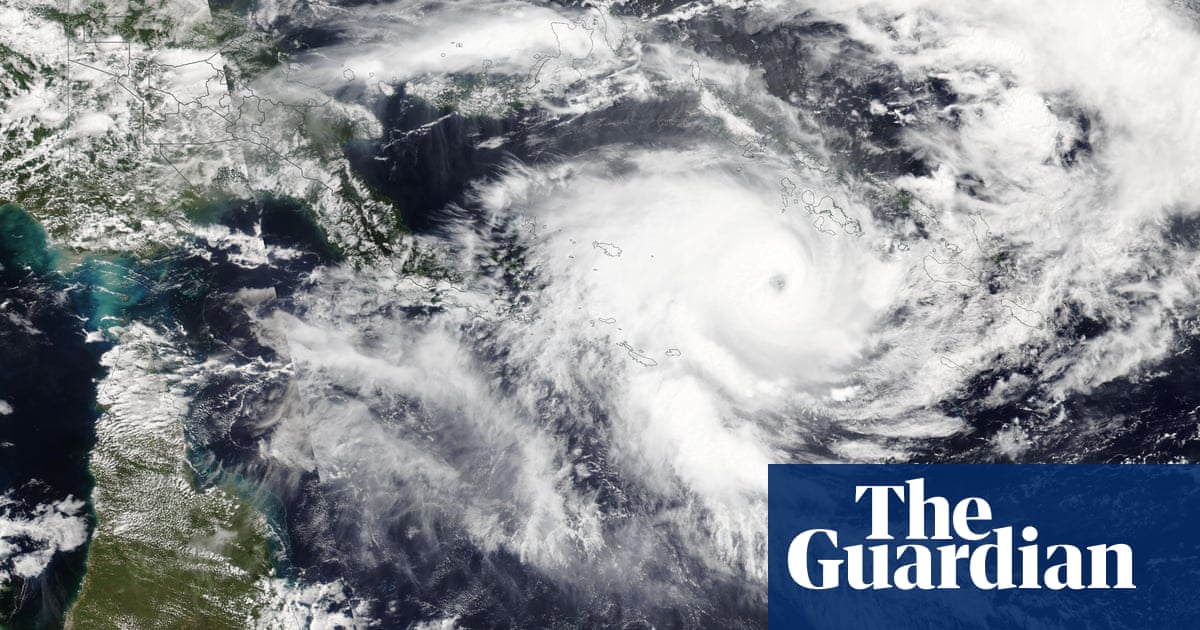
As Cyclone Maila continues to disrupt parts of Papua New Guinea’s East New Britain province, local communities are stepping up to lead recovery efforts, clearing roads, restoring access and organizing as they await full government-led assessments.
Provincial Administrator Levi Mano, speaking during a provincial disaster briefing on Monday, April 6, described the impact of the cyclone as widespread and affecting infrastructure, settlements and coastal environments in multiple districts.
He confirmed that heavy rain and strong winds had caused flooding in populated areas, and that some coastal disturbances had contributed to rising water levels in certain locations.
While assessments are still ongoing, Mano acknowledged that damage had been recorded to key systems and infrastructure networks, with teams deployed on the ground collecting data to determine the full extent of the destruction.
He noted that communication had been established with the affected districts to coordinate updates and response measures.
Despite the magnitude of the disruption, one of the most notable developments has not been the formal emergency response but the grassroots action taking place across communities.
In several affected areas, residents have begun clearing debris from roads, restoring access routes and assisting with basic recovery efforts.
From rural stretches to peri-urban areas, local groups and informal work teams have mobilized independently, using all available tools and resources to reopen blocked roads and reconnect isolated communities.
Mano emphasized that while government agencies coordinate assessments and planning, communities must take responsibility for their immediate environment, including limiting movement during hazardous conditions and avoiding unnecessary travel while the cyclone persists.
Authorities have also urged caution among maritime operators and coastal communities, warning against sea travel during the current weather system.
Strong winds and rough seas continue to pose risks, and authorities have advised boat operators to remain grounded until conditions improve.
At Tokua Airport, operations reportedly resumed following technical inspections, allowing limited flights to restart.
However, officials have encouraged continued monitoring and compliance with safety advisories issued to carriers and travelers.
Mano confirmed that while no widespread casualties had been officially verified at the time of the briefing, there were preliminary reports of possible incidents that still require confirmation through formal reporting channels.
The administrator also addressed long-term concerns, noting the province may not act immediately to declare a state of emergency.
Rather, such a decision would depend on the comprehensive evaluations currently being conducted and the recommendations that follow.
Meanwhile, the province’s disaster management teams are compiling reports to be presented to national authorities, forming the basis for future coordinated response and recovery measures.
Beyond immediate response measures, the situation has highlighted both vulnerability and resilience. Communities, some of which have faced recurring flooding and infrastructure challenges over the years, are once again demonstrating their ability to organize locally, stepping in where formal systems are still catching up.
As Cyclone Maya continues to influence weather patterns across the region, forecasts call for continued rain and strong winds in the coming days.
For many in East New Britain, the priority remains clear: stay safe, stay alert, and rely on both the strength of the community and coordinated support as recovery progresses.