


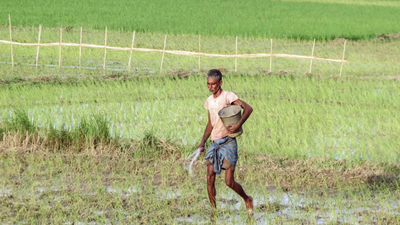
The government on Saturday said the threat posed by a possible El Nino is unlikely to cause major damage to agriculture this year, pointing to stronger irrigation systems, higher reservoir storage and better preparedness compared to previous drought-related years.According to PTI, the assurance came after Agriculture Minister Shivraj Singh Chouhan chaired a review meeting ahead of the Kharif sowing season, which begins with the onset of the south-west monsoon in June and contributes a major share to India’s annual agricultural output.“Farmers need not worry,” Chouhan said at the meeting, according to a ministry statement. He said the government is moving forward with “full preparedness”.“Despite the potential El Niño impact, its impact on the agricultural sector is likely to be relatively limited compared to previous examples,” the statement said.The India Meteorological Department (IMD) has predicted below normal monsoon rainfall this year at about 92 per cent of the long period average and the possibility of El Nino conditions developing during the season. A final forecast is expected in late May.Officials said reservoir storage across the country is currently at 127 per cent of the normal level for this time of the year, providing significant relief for irrigation during the crop season.Seed stocks for both Kharif and the upcoming Rabi seasons have been secured above requirements, with emergency reserves kept ready in case farmers need to re-sow or shift crops due to adverse weather.Officials at the meeting compared current preparedness to El Niño episodes between 2000 and 2016, when crop losses were higher because farmers were more dependent on rainfall and had less tools to deal with climate shocks.Since then, India has expanded micro-irrigation coverage, introduced climate-resilient seed varieties and improved early warning systems, the government said.Paddy, the main kharif crop, is said to show particularly high resilience, while contingency plans are being prepared for crops considered more sensitive to rainfall deficit.Chouhan directed states to activate contingency plans up to the district level and asked officials to promote drought-tolerant seeds and delay sowing strategies if conditions worsen.The ministry said crop-weather monitoring mechanisms are already operational, with the Center and states regularly coordinating for rapid response measures.El Nino, a periodic warming of surface waters in the central and eastern Pacific Ocean, often disrupts monsoon patterns in South Asia and has historically been linked to weaker rainfall in India.India is the world’s second largest producer of rice and wheat, and agricultural production directly impacts the livelihoods of millions of people.

