


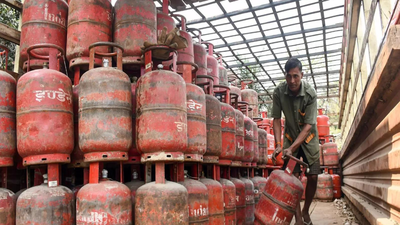
Impact of US-Iran conflict: The global energy shock stemming from the US-Israel conflict with Iran is now affecting economies beyond the Middle East, highlighting how deeply interconnected fuel supply chains are. For example, in India, a shortage of cooking gas is emerging, while in California, gasoline prices have soared to nearly $6 a gallon. Although these problems seem unrelated, both stem from the same source – severe disruption to global oil and fuel flows following Iran’s near-blockade of the Strait of Hormuz, a route that previously handled about a fifth of the world’s oil trade. The disruption has forced countries to adopt emergency measures to reduce reserves and control fuel supplies.Some of these emergency responses are now causing additional stress elsewhere. India, where liquefied petroleum gas (LPG) is widely used for cooking, was dependent on the Middle East for more than 90 percent of its LPG imports before the conflict escalated. Due to supply disruption, the government directed refiners to rapidly increase LPG production. To achieve this, refiners reduced production of alkalites – fuel-blend additives manufactured using LPG feedstock.According to a Reuters report, this change is now affecting the fuel market of California. The kingdom already faced pressure from lower fuel shipments and lower exports from Asian refiners struggling to access Middle Eastern crude. The lack of alkylates has made the situation worse because California relies heavily on these additives for its cleaner-burning gasoline blends mandated under strict environmental regulations.As a result, the Middle East conflict is affecting California on two fronts. Lower fuel exports from Asia have weakened the availability of gasoline supplies, while India’s decision to prioritize cooking fuel production has reduced exports of alkylates needed for California’s special gasoline formulations.“As India’s LPG supplies are disrupted by the closure of the Strait of Hormuz, refiners there are producing and exporting less alkylates, adding pressure to an already tight California gasoline market,” Mason Hamilton, chief economist at the American Petroleum Institute, told Reuters.India’s decision to cut off alkylate exports comes at a particularly difficult moment for California. According to GasBuddy analyst Patrick de Haan, fuel prices in the state have already reached their highest level since 2022 due to the broader global energy crisis, and tighter alkylation availability could push prices even higher as summer travel demand increases.“The more acute the alkylate supply shortage becomes, the higher prices could rise in California,” de Haan said.A spokesperson for the California Energy Commission said officials are aware of India’s changing fuel preferences. However, the agency currently believes the state still has adequate gasoline and blending reserves and immediate shortages are not expected, although the situation remains closely monitored.The average price of gasoline in California was $6.14 a gallon on Friday, after hitting a three-year high of $6.16 in May, according to GasBuddy data. Analysts have warned that prices could exceed $6.50 a gallon in the coming weeks.The situation is made worse by seasonal fuel regulations in the United States. Summer-grade gasoline standards require cleaner-burning blends, increasing production costs nationwide. According to Kepler analyst Nikhil Dubey, California enforces the strictest standards in the country, making its fuel system even more dependent on alkalites. Nationally, gasoline prices averaged $4.52 a gallon on Friday.For India, it is becoming difficult to continue alkylate exports as domestic LPG shortage remains severe. Reliance Industries, which operates the world’s largest refinery complex in Gujarat’s Jamnagar, had earlier this month said it was reducing alkylate production and exports to maximize LPG production. India’s alkylate exports fell to 33,000 barrels per day in April, nearly half the 61,000 barrels per day exported in March and the lowest level since October 2023, Kpler data showed.California policymakers also have limited options if the conflict drags on. Analysts say temporary steps such as fuel tax cuts could actually worsen the problem by increasing fuel demand at a time when supply constraints remain severe.“You can’t put too much pressure on a system that’s already overburdened,” de Haan said.According to analysts, California Governor Gavin Newsom may ultimately have little choice but to temporarily relax the state’s fuel specifications to reduce reliance on alkylates and ease supply pressure.“His hands are tied. This is his only option,” De Haan said.

