


When Nadia Meliani moved to Beijing a decade ago to open a French restaurant, she didn’t expect that China would become a global center for foie gras – let alone that she would work in the industry.
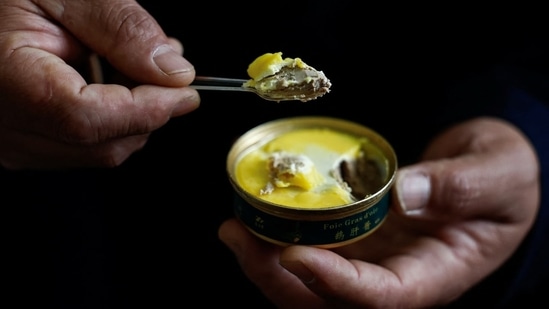
Today, the chef, a native of France, works long hours on foie gras farms in northeastern China, trying to bring out the exquisite, mouth-watering flavor. He and his business partners aim to satisfy the appetite of affluent Chinese. She thinks that someday, French diners will want to try it, too.
Meliani’s venture is part of an unprecedented boom taking place half a world away from the Périgord Noir region of southwestern France, famous for its produce. According to a June report from state-owned China International Capital, Chinese producers now make 45% of the global supply of foie gras – that’s 11,000 tonnes per year.
Chinese companies are also profiting from other gourmet foods like caviar and truffles. Chinese truffle exports have more than tripled since 2022, while the caviar supply chain, once led by Iran and Russia, is now dominated by China.
“For decades, among Western consumers, ‘Made in China’ was associated with cheap, low-quality, simple product,” said Ivan Pei, director of consulting firm Trivium China and an expert on Chinese agriculture. “Over the last decade, we’ve really seen a whole bunch of made-in-China brands where the products are “high quality at a low price,” he said.
Chinese caviar companies accounted for 40% of global exports last year, according to International Trade Center data, using industrial-scale sturgeon farms to catch hundreds of tons of the fish.
A Chinese company selling caviar under the brand name Kaluga Queen is the world’s largest producer of caviar. That company, Hangzhou Qiandaohu Xunlong Sci-Tech, raised more than $150 million in a Hong Kong public offering in June, and it sells most of its caviar outside China.
The foie gras craze arose from Beijing’s effort to find sustainable industries for rural villages that were left behind as workers flooded into the cities. The state has supported the growth of the industry by providing government loans and marketing assistance, Pai said.
Today, producers are concentrated in the eastern provinces of Shandong and Anhui, where farmers turn out thousands of tons of foie gras by force-feeding ducks and geese to enlarge their livers. The liver is taken out and cured before serving, perhaps pressed into a pan on bread or chilled.
Chef-turned-entrepreneur Meliani believes there is room for improvement in Chinese foie gras. The texture is good, he said, but the flavor doesn’t linger in your mouth as it should.
Although foie gras is hardly a classic Chinese dish, the cuisine includes innards of meat such as duck and tripe, helping local foods adapt to the French creation. Industry executives say caterers are now seeking foie gras to add a luxurious touch to weddings and banquets.
Restaurants and manufacturers are offering creative offerings like foie gras ice cream, blueberry-flavored foie gras or sushi rolls with savory dishes. At a popular chain in China specializing in Peking duck, chefs mold the foie gras into cherries to enjoy with the meat.
It is still a treat for the wealthy elite in big cities. The average Chinese is not spending much these days due to the recession in the economy. But the low price of local foie gras – the French variety can cost almost double that – adds to its appeal.
“There’s definitely a lot more demand than before,” said Ignace Leclerc, founder of TRB Hospitality Group, which runs eight high-end Beijing restaurants serving foie gras made in China. He has been surprised to see it on menus not only in Western-style eateries but also in more general Chinese establishments.
boost exports
Outside China, sales of Chinese foie gras are currently limited to a few small markets. Still, some in the industry see foie gras as following a familiar pattern in which Chinese exporters, honed by domestic competition, beat out global competitors with low prices.
Ma Lijun is the general manager of Shandong Chunguan Food, which employs 500 people and produces more than 3,000 tons of foie gras annually. He said the domestic industry has become highly competitive in the last five years due to “endless price wars”. He expects half of the company’s revenue to come from outside China in the next decade.
Macau, a gambling hub, could be a harbinger. The former Portuguese colony is governed by Beijing as a special region of China, but has its own import regulations and resembles an overseas market for mainland producers. They are making rapid inroads.
Hugo Ao, sales manager for food distributor Olivier Pacific, sells Spanish foie gras to restaurants and casinos in Macau. He said the company has lost customers to cheap Chinese suppliers who sell it for about $17 a pound, compared with $28 a pound for Spanish products. This has forced Olivier Pacific to lower prices to compete, AO said.
The European Union is getting ready to attack. This year, the European Union strengthened rules on foie gras labeling. The rules prevent foreign producers from trying to make their foie gras sound authentic by using terms like “Périgord-style”.
Alexandre Lyon, head of the Perigord foie gras association, said that if Chinese imports arrive, customers may be hesitant at first but ultimately the price will win out.
“This could change everything,” Lyons said.
Write to Katrina Northrop at katrina.northrop@wsj.com


