


CHICAGO – Property taxes in Cook County have increased at nearly double the rate of inflation, according to a new study from Cook County Treasurer Maria Pappas’ office.
Over the past three decades, property taxes imposed in the state’s largest county have increased about 182%, while inflation has increased less than 91% and average wages have grown by 161%, according to Pappas’ office.
The average property tax bill in Cook County was about $5,827 in 2024, data from the treasurer’s office shows. But if property taxes had only increased at the rate of inflation, the average property tax bill would have only been about $3,057 that year.
This latest study comes just two days before the next installment of Cook County property tax bills are due, and the rising costs have become a lightning rod for taxpayers and local elected officials. Pappas and other officials have called on state lawmakers to pass “meaningful tax reform and find ways for local tax agencies to reduce spending.”
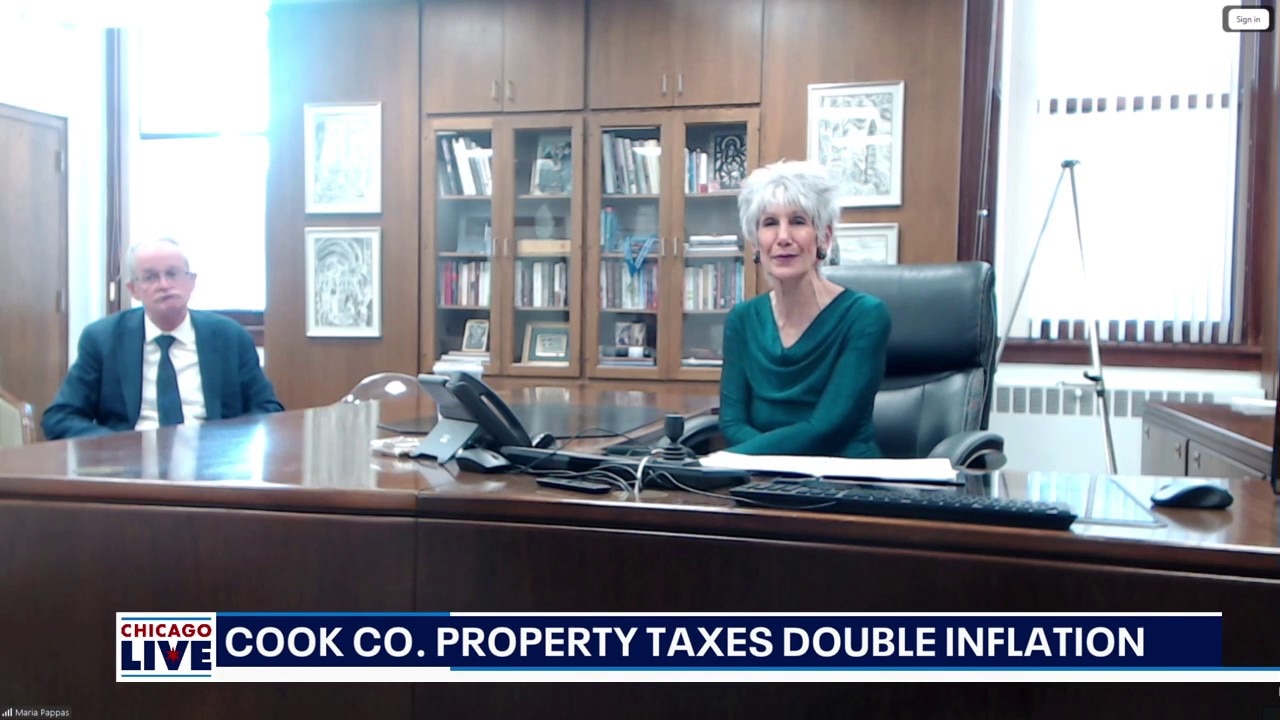
“This is a call to action,” Pappas said in an interview on ChicagoLIVE. “It’s a call to people to say, ‘I’ve had enough and something needs to be done about it.'”
Overspending and loopholes
Why you should care:
Pappas argued the problem stems from overspending by the hundreds of local taxing bodies in Cook County, which typically only increase the amount of taxes they impose on residents. He called it “a drunken sailor’s expense problem.”
These sharp increases have occurred despite a state law called the Property Tax Extension Limitation Act (PTELL), which limits how much each local government can increase its property tax rate each year. They can only increase your property tax rate up to the inflation rate or 5%, whichever is lower.
But, Pappas noted, there are a number of loopholes in the system that local tax agencies use to get around that law:
- Autonomous municipalities, which are generally larger cities and towns, have more leeway from the state to raise taxes and are not bound by PTELL.
- Local governments can raise their taxes beyond the legal limit if voters approve higher taxes through a referendum, which agencies typically try to put on ballots in low-turnout elections in which a small percentage of residents actually vote.
- Tax increment financing (TIF) districts, which are designated areas for which property tax revenues can be dedicated to reinvestment, are also not limited by PTELL.
- Specific funds, such as the one that allowed Chicago Public Schools to reinstate a property tax dedicated to public pension payments, are also not subject to PTELL in their first year.
- Some bond issues (which are loans granted by government agencies) are also exempt from the legal limit.
A key factor: spending on education
Go deeper:
Pappas’ study also noted that local taxing bodies may feel the need to avoid PTELL for many reasons, but a key factor is education spending, or lack thereof.
According to the report, the state of Illinois provides only 24% of all K-12 public education costs, the lowest percentage of any state.
Why does this matter?
Less funding from state government forces local public school districts to rely more on property taxes to run their schools. They are also limited in the number of other ways they can raise revenue. The study noted that local governments like Cook County have tried to keep property taxes relatively stable by relying on other sources, such as sales tax.
K-12 school districts accounted for about 55% of the average property tax bill in 2025, while cities and towns accounted for only 18%.
For CPS, according to Pappas’ study, the problem is worse because the district pays its own pension costs, unlike the rest of the state’s school districts.
Read the executive summary of the study “How State Laws Failed to Stop Decades of Skyrocketing Property Taxes” on the Cook County Treasurer’s website.