


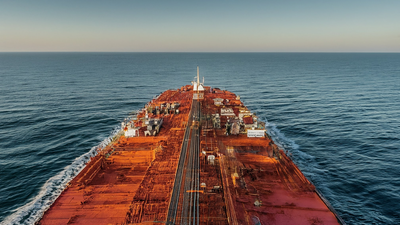
As the ongoing conflict in the Middle East increases pressure on global energy supply routes, oil giants from the United Arab Emirates and Qatar are turning to unconventional shipping strategies to move their oil and gas out of the Persian Gulf to countries that need the energy. ADNOC is monitoring the Strait of Hormuz, one of the world’s most sensitive sea corridors, where Iranian military and US naval patrols operate in close proximity amid rising regional tensions.The UAE state energy firm has relied on so-called “dark transit,” according to ship-tracking data and people familiar with the matter cited by Bloomberg. What are dark transits?Dark transits are voyages in which ships turn off transponders while passing through the Strait of Hormuz, allowing tankers to avoid detection in real time. This strategy has so far helped maintain export flows during periods of geopolitical risk.Unlike many regional producers and commodity traders who rely on chartered vessels, Adnoc relies on its own controlled fleet, which includes vessels operated through the navigation and logistics arm’s majority-owned Navigation 8 and its joint venture with Wanhua Chemical Group. The fleet includes crude carriers, refined product tankers and gas transport ships, giving the company greater operational flexibility.Industry sources say this structure has allowed Adnoc to maintain relatively efficient cargo movements, even as others face constraints associated with shipowners’ risk appetite. Qatar has also continued to export through Hormuz, highlighting a broader pattern of Gulf producers adapting to volatile conditions in one of the world’s most important energy corridors.An LNG tanker, the Al Rayyan, was recently tracked north of Muscat after passing through the strait on its way to China, although it briefly stopped transmitting near Qatar’s Ras Laffan facility at the beginning of the month, according to ship data. As ships adopt covert navigation practices, such intermittent signal loss has become common.Adnoc’s strategy also includes short-cycle “shuttle runs”, where ships return quickly after delivery to reload cargo, helping to maximize throughput from terminals such as Zirku Island and the Ruwais Refinery Complex. Ship-to-ship transfers also reportedly take place in safe waters near Fujairah or Sohar or off the west coast of India.What about LNG flows?For LNG operations, similar prudential activities have been observed. The tankers are said to have headed for the strait near Fujairah before disabling tracking systems en route to Das Island, Adnoc’s key export hub inside the Gulf. Satellite imagery suggests continued activity at the facility, despite limited broadcast data from ships.Analysts cited by Bloomberg said the approach reflects both strategic urgency and logical necessity, as storage shortages and geopolitical uncertainty prompt producers to continue exporting. However, the scale of such shipments remains below pre-conflict levels, particularly in the LNG trade, where only a few crossings have been confirmed in recent months compared to normal daily flows.Reliance on low-visibility navigation also complicates verification of cargo routes, with ships potentially selecting alternative corridors or passing through Iran-influenced waters where informal arrangements may apply.Despite this ambiguity, this pattern highlights how producers are adapting to keep vital energy supplies flowing through the Strait of Hormuz, even as diplomatic talks continue to shape the broader security outlook in the region.