


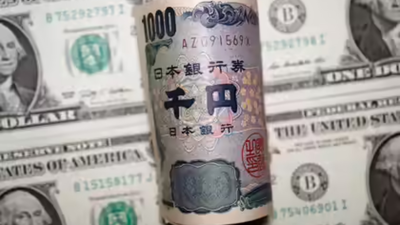
The US dollar fell against the Japanese yen for a second consecutive day on Friday after Japan was reported to be intervening in currency markets to support its weakening currency, Reuters reported.The greenback was headed for its steepest weekly decline against the yen since early February, down about 1.7 percent this week.Markets remained cautious after Japan’s top currency diplomat Atsushi Mimura said the market still appeared speculative, indicating continued concerns among officials over the yen’s sharp move.The dollar fell from about 157.1 yen to 155.49 yen before recovering somewhat following Mimura’s comments. Last time it was trading stable at 156.62 yen.Japanese officials intervened on Thursday to buy the yen after the currency weakened to 160.7 per dollar, its lowest level since July 2024, two sources familiar with the matter told Reuters.“The durability of the intervention remains uncertain,” said Yuto Shinohara, senior investment strategist at Mesirow Currency Management in Chicago.“Historically, its effects fade without policy changes, rate increases or coordination.”Data released by the Bank of Japan on Friday showed authorities would have spent up to 5.48 trillion yen ($35 billion) during the operation, slightly less than the $36.8 billion used in July 2024.The yen has been under pressure due to the wide gap between US and Japanese interest rates.Its weakness has also been worsened by higher crude oil prices linked to the Iran war, which has provided support to the dollar.On the policy front, the European Central Bank and the Bank of England kept interest rates unchanged on Thursday, in line with expectations. After this, the US Federal Reserve and the Bank of Japan had already imposed a ban.However, both the ECB and BOJ indicated they may start raising rates from June to control inflation pressures due to higher imported energy costs.The euro rose 0.32 percent to $1.177 and was on track for a second consecutive weekly gain.Sterling was up 0.25 percent at $1.1364, on track to rise for the fifth consecutive week.The dollar fell 0.27 percent to 0.779 Swiss francs and was headed for a second weekly loss.“While markets are estimating about a two-thirds chance of a June hike from the BOJ, expectations for a Fed cut have largely evaporated,” Shinohara said.“That divergence, along with a more aggressive Fed, limits scope for sustained yen appreciation.”