

There’s a magic number that makers of everyday items go crazy over: $9.99.

Just a penny more and buyers start walking away.
Keeping prices below $10 has long been a strategy used by American retailers. It’s a tried-and-true price point that encourages people to switch brands and try new products from soap to soda, pain relievers to party favors. And this is more important than ever as many Americans feel troubled by inflation.
But it is becoming increasingly difficult for companies to keep products under that price point. Higher fuel prices, tariffs and other factors are increasing the cost of making products. This is forcing many companies to drive hard bargains and sacrifice profit margins to keep prices below the psychologically important $10 threshold.
Michael’s, the craft-store chain, is redesigning the store layout to expand its selection of under-$10 offerings. Toy maker Hasbro has simplified the packaging for its action figures and board games. Boston Beer began offering Twisted Tea that comes in four-packs instead of six-packs. Walmart dropped the price of a 24-pack of Coke and Pepsi to less than $10 in a summer promotion announced last week. And emerging brands that want to grow are settling for lower margins and cutting marketing budgets, in the hope that they can attract new buyers with price tags starting at nine.
Hasbro chief executive Chris Cox said, “$9.99 is a real price point that greatly influences consumer behavior.” Cox calls it a “snackable” price, “great for a quick treat, gift or a small display of love or appreciation.”
Hasbro has doubled efforts to meet the $9.99 price point, Cox said, while working with designers and suppliers to cut product-packaging costs.
It now sells its Connect 4 games in a sleeve instead of a box. The packaging for its Transformers Cyber Changer action figures has been simplified. And the new World Cup edition of its Monopoly Deal card game comes with no packaging at all – the case holding the cards works on its own.
Rival toy company Spin Master, meanwhile, credits advances in automation for helping it streamline its manufacturing process for a modernized version of its Rubik’s Cube, which it is introducing later this year. The new process helps the cube spin more smoothly—and keeps the price under $10.
“The appeal of prices like $9.99 is not about saving a penny,” said Vicki Morawitz, a professor of marketing at Columbia Business School in New York. “Consumers categorize prices into categories, so a price under $10 may feel different than a price $10 and above, even if the actual monetary difference is negligible.”
As inflation has pushed many everyday prices above familiar ranges, products that remain below those ranges may be more attractive than before, he said.
While craft beer fans are often willing to pay more, consumers of Boston Beer’s Hard Twisted Tea are so sensitive to the sub-$10 price tag that the company created a four-pack of 16-ounce cans. CEO Jim Koch said the price for a six-pack has gone up to more than $10 for 12-ounce cans, so “this gives us an entry point.”
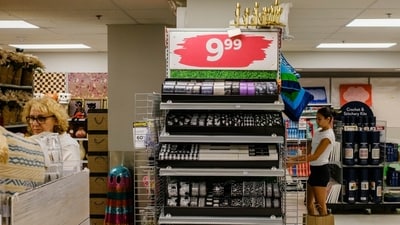
Most of the products at craft store, Michael’s, are already priced under $10, but the company is looking to expand its offerings an additional 10% below that price by the end of the year. Chief Merchandising Officer Stacey Shively said the accessible price point allows customers to add fun to their shopping trip while staying within their budget.
This will add space on the sales floor that store managers can use to display products such as charms, markers or party gifts.
Companies that sell certain products on Amazon get additional incentives to keep their prices under $10. In the baby products, beauty, health and personal care categories, the e-commerce giant charges an 8% referral fee for items selling for $10 or less, while the fee can reach as high as 15% for items that exceed that limit.
James Barikman, CEO of Carlin Consumer Health, said Amazon’s fee structure was an important consideration when it introduced its Mineral Ice Extreme Cooling pain reliever in June with a price of $9.99.
The company is also betting that the price will help it attract its target audience: Gen Z and Gen Alpha athletes.
Standing out against larger competitors is why Ryan Lupberger, co-founder and CEO of natural cleaning-products company Clean Cult, hasn’t raised prices in seven years, even though staying in line has eroded his profit margins.
When its competitors often price hand-soap refills at $10.99 or $11.99, Clean Cult — which packages its cleaners in milk-carton-like containers to avoid plastic use — has intentionally priced some of its products at $7.99. Lupberger says the price entices new people to try the product. And it regularly sets discounts for its laundry detergent to bring the price down from nearly $12.99 to as low as $9.99. When this happens, sales more than double.
“People don’t waste a lot of time looking at retailers’ shelves, do they?” Lupbarger said. When shoppers see a price starting at 10 instead of nine, “it’s a very different price experience…immediately you’ll think it’s expensive because your brain doesn’t process the numbers.”
Other psychologically important price points: below $5 and below $20.
Shai Eisenman, founder and CEO of Bubble Skincare, says that many customers who buy her products — like the Cosmic Rain Hydrating Mist or Star Dew Eye Cream — say $20 is their price range. Because of this, it has not raised prices in the last few years – even though its margins have declined. It has had to cut its marketing budget to reach its price target.
“It’s always a struggle to make sure we stay competitive,” Eisenman said. “But at the same time, we hear from our community that they feel a lot of economic pressure, and we want to make sure we’re delivering at cost.”
Write to Natasha Khan at natasha.khan@wsj.com