


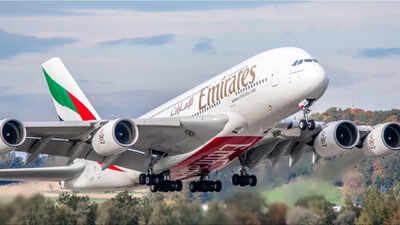
The ongoing war in the Middle East has eliminated much of Dubai’s travel appeal. Emirates, the world’s largest international airline, is operating some flights to Dubai almost empty as travelers avoid the Persian Gulf. Flights to and from the US and continental Europe have been hardest hit, with passenger numbers falling sharply on many routes, as carriers face challenges restoring their networks amid the escalating conflict.Data compiled by Emirates and reviewed by Bloomberg shows that planes returning from Prague or Budapest are carrying only 5% to 10% of passengers. Many planes from New York took off with only one-fifth of the tickets sold, and at least one Airbus A380 last week took off with fewer than 35 passengers on a jet that typically seats about 500. Departure from Chicago occurred with half-empty cabins.According to a memo, Emirates faces several thousand no-shows on outbound flights daily, highlighting the complexity of running an operation that typically involves hundreds of daily flights that are nearly full. The airline is offering refunds and flexible rescheduling of flights till the end of the month.“Given the circumstances, current inbound occupancy is surprisingly low,” an Emirates executive told Bloomberg. Emirates said it would continue to rapidly restore its network, provided it can do so safely.Passenger demand remains weak, but airlines are also carrying cargo, including perishable goods, which is generating revenue. Boeing 777s are preferred as they have more optimal cargo capacity than the Airbus A380. With the Strait of Hormuz effectively closed, Emirates flights are one of the few ways to import supplies.Meanwhile, flights departing from Dubai show a different picture as passengers continue to depart from the city despite fewer aircraft available. Operations have been disrupted by Iranian missile threats and several drone incidents near Dubai International Airport since the war began, causing minor injuries and some damage. On Monday, Emirates suspended operations for more than seven hours after a fuel-tank fire caused by a drone, and resumed flights later the same day.The other major Gulf carriers, Etihad Airways and Qatar Airways, have resumed a slimmed-down service, mainly focused on evacuating stranded passengers. However, Emirates continues to operate at a faster pace than competitors, offering at least six times more flights than Qatar Airways. Some of Emirates’ planes are out of position in Europe and China.On a Paris-Dubai flight, an Airbus A380 with a high-density layout with about 600 seats had only about 25 passengers on board, about the same number of crew needed to operate it. London Heathrow departures have fared slightly better, with around 20% of tickets sold, still well short of almost full occupancy on Emirates’ dozens of daily UK services. Advance booking for incoming flights is at about a third of capacity, which is unusually low given the upcoming busy Easter season.