


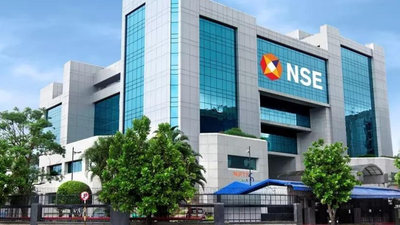
India’s macroeconomic outlook for 2026 will largely depend on monsoon performance, while the country’s equity investor base is moving beyond traditional markets and becoming younger and more diverse, the National Stock Exchange (NSE) said in its latest report.However, the exchange highlighted that despite the rapid increase in investor participation, trading activity remains highly concentrated among a small group of large investors in the cash, futures and options segments.
El Nino risk emerges as major challenge for 2026
According to the NSE report, the performance of monsoon is the biggest risk for the coming year. The exchange noted that the India Meteorological Department (IMD) has revised its southwest monsoon forecast to 90 per cent of the long-term average, one of the lowest forecast levels on record.The report said there is a 60 percent chance of deficient rainfall and a 24 percent chance of below normal rainfall.“For 2026, the major challenge is the emergence of El Nino risk,” NSE said. He said downside risks are visible in various sectors.The probability of below normal rainfall is highest in northwest India at 46 percent, followed by the south peninsula at 45 percent. Central India and the monsoon core zone each have a 43 per cent chance of below normal rainfall, the report said.NSE cautioned that previous El Nino years have had a significant impact on agricultural production, with rainfall deviations ranging from a 5.4 per cent deficit in 2023 to a 22.1 per cent deficit in 2002.Historically, deficient rainfall has impacted kharif sowing, reservoir levels, rabi production and food inflation, the exchange said.
Investor base expands beyond traditional markets
The NSE report highlights a structural shift in India’s equity market participation, with investors increasingly coming from smaller cities and younger age groups.The registered investor base reached 13.1 crore by May 2026, taking about seven months to add the latest one crore investors.The investor base grew at a compound annual growth rate (CAGR) of 25.3 per cent between FY21 and FY26, compared to 16.3 per cent during FY16-FY21.At the regional level, North India now holds the largest share of investors at 36.7 per cent, which will overtake Western India in 2022.NSE said states outside the top 10 now account for 27 per cent of the investor base, compared to around 22 per cent in FY2017, indicating a gradual expansion beyond the traditional large states.The profile of investors has also become younger. The share of investors under 30 years of age increased from 23.5 percent in March 2020 to 38.3 percent in May 2026, while the average investor age declined from 38 years to 33 years.Young investors continue to dominate new registrations, with investors under 30 accounting for 53-59 per cent of the incremental contribution.Female participation has also improved, with the share of women among individual investors being around 25 per cent by April 2026.
Market activity remains concentrated among large traders
Despite wide participation, NSE reported that trading turnover continues to be dominated by a relatively small section of active investors.Data for May 2026 showed that the top 2.6 per cent of investors in the active cash market contributed 92.3 per cent of the total turnover.Investors with turnover of Rs 10 crore and above were only 0.3 per cent of active investors, but contributed 79.4 per cent of cash market turnover.Concentration was even greater in derivatives markets. In equity options, the top 0.3 per cent investors contributed 69 per cent of the premium turnover, while in equity futures, the top 7.8 per cent investors contributed 93.3 per cent of the turnover.The changing investor profile reflects deeper market penetration across India, but the concentration of trading activity highlights the continued dominance of high-volume participants in market transactions, the NSE report said.