


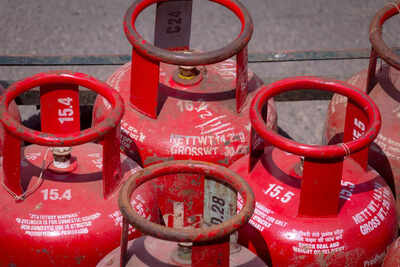
The government on Friday increased commercial LPG allocation by 20% to 70% of pre-crisis levels to provide relief to key industries from the ongoing gas supply disruption. The additional supply will prioritize labour-intensive sectors such as steel, automobiles, textiles, colours, chemicals and plastics, which are critical to macroeconomic activity.The move is aimed at stabilizing industrial operations, ICRA senior vice-president (corporate ratings) Prashant Vashishtha said, adding that increased domestic LPG production and alternative imports “have narrowed the losses, providing some comfort.”Pankaj Chaddha, president of engineering export body EEPC India, said the measure would help steel mills, especially smaller units, maintain production. “Steel is a key segment of the engineering goods sector, and its shortage could seriously impact the production chain. Additional LPG allocation should ease supply constraints and ensure stable production,” he said.
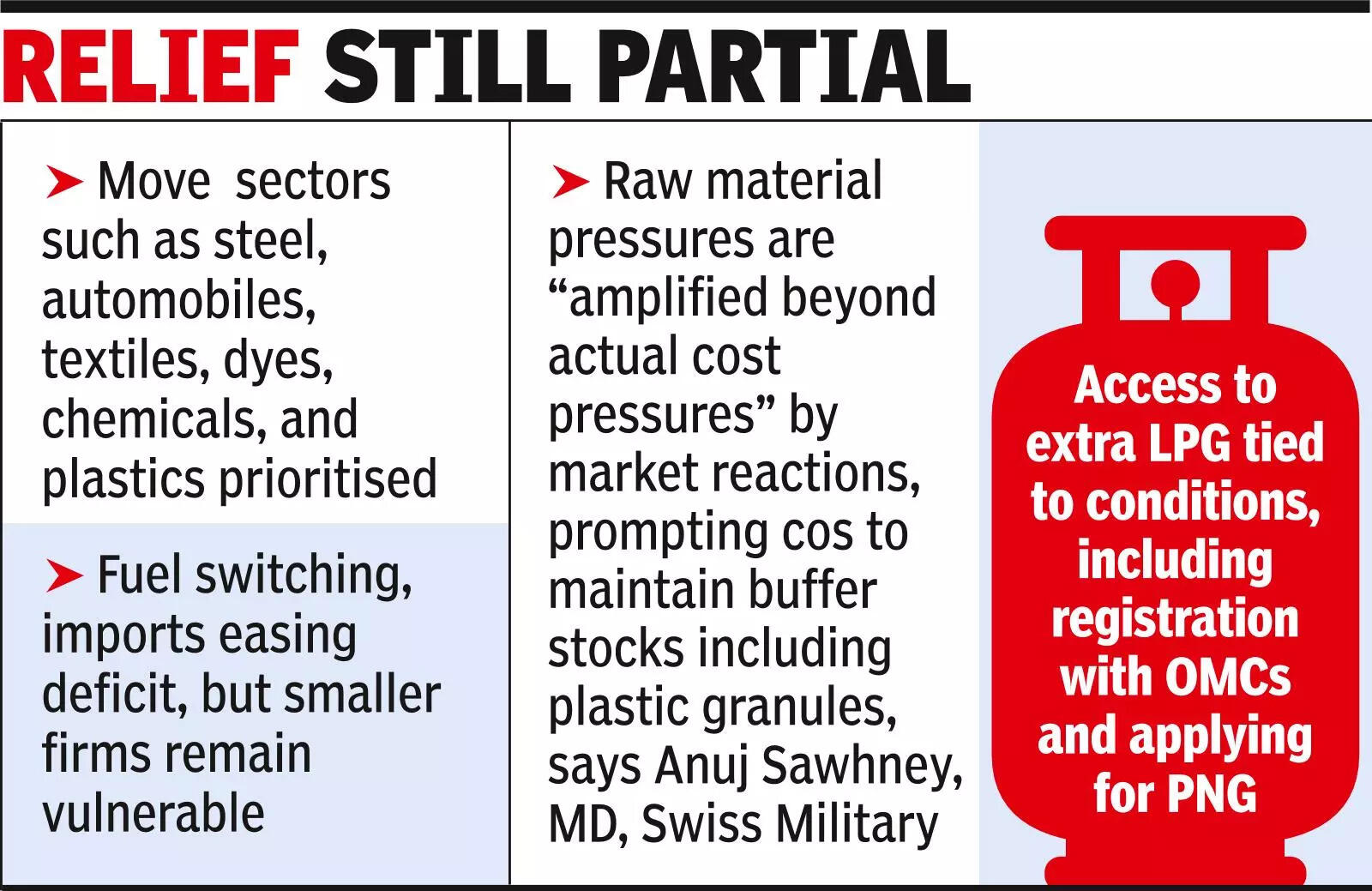
To reach 70% of pre-crisis levels. Steps towards giving priority to labor intensive sectors
However, the apparel sector sees the move as a partial relief but doubts that it will meet even half of its near-term demand. Yarn processing, important for apparel production, is largely gas-powered. Supply to hundreds of units in Tiruppur has been cut for 10 days, affecting around 1 lakh workers. The shortage has disrupted the credit cycle and shifted risk in favor of well-capitalized buyers, while raw material costs including polyester yarn and transportation have increased. “Freight and raw material costs have increased significantly, making it difficult to process the yarn,” said Alexander Neroth, director of NC John Garments.The gas shortage began with the West Asian conflict and the near-closure of the Strait of Hormuz to commercial shipping, leading the government to reduce commercial LPG allocations by 20% on March 12. Since then, the allocation has gradually increased to 70% of pre-crisis levels.Access to the additional 20% is conditional. Industrial users will have to register with oil marketing companies like Indian Oil Corporation, HPCL and BPCL and apply for piped natural gas connections with city gas distribution entities to qualify. Process industries and units relying on LPG for specific heating requirements will get preference where natural gas cannot be an option.Manufacturers in different sectors are adapting to the shortage with various measures to maintain production. Ajay Singhania, MD, Epack Durable, said production has been cut by about 50% in the last three weeks due to shortage of LPG and piped gas. “We have introduced interim measures such as partial fuel-switching in all processes, but these come at a cost to efficiency and cost. For the consumer durables sector, where demand is seasonal, consistent energy availability is important to ensure timely production,” he said.Auto component manufacturers, particularly forging and casting units, continued production with some variation in in-house solar-powered electrical heating. A Chennai-based exporter said the transition to renewable energy helped resolve the situation relatively easily, even as inventory dropped from 15-20 days to 2-3 days. He said that small companies are feeling pressure due to greater dependence on LPG.(With contributions by Reba Zakaria, G Balachander, Vaitheeswaran B and Asmita De)


