

Mark Dubowitz says Trump has ‘maximum influence’ over Iran as ceasefire begins
Mark Dubowitz, executive director of the Foundation for Defense of Democracies, discusses President Trump’s firm policy toward Iran following a two-week ceasefire agreement. It highlights the weakened state of the regime after 15 months of the Trump administration, making it unlikely that Iran’s 10-point peace plan with “ridiculous demands” will be accepted. Dubowitz discusses the options facing Iran’s new regime.
NEWNow you can listen to Fox News articles!
President Donald Trump publicly thanked what he called “the great Prime Minister and Field Marshal of Pakistan, two fantastic people!!!” in a Truth Social post on Friday praising Prime Minister Shehbaz Sharif and Pakistan’s military chief Asim Munir.
Sharif quickly responded in
The public exchange capped a remarkable rise for Munir, who has become one of the few foreign officials Trump and Iran’s security establishment trust.
TRUMP AGREES TO 2-WEEK CEASEFIRE IF IRAN OPENS STRAIT OF HORMUZ

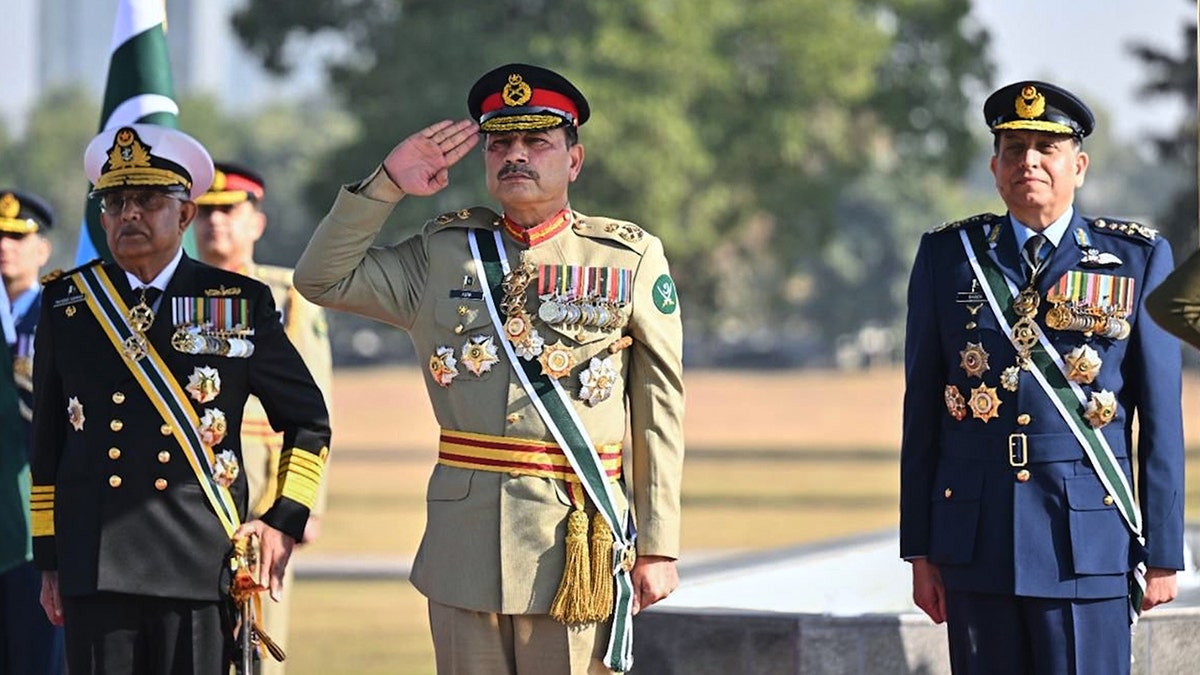
In this photo released by Inter Services Public Relations, Pakistan Chief of Defense Forces and Army Chief General Asim Munir, center, Pakistan Naval Chief Admiral Naveed Ashraf, left, and Pakistan Air Force Chief Marshal Zaheer Ahmed Babar attend a guard of honor ceremony at the joint military command headquarters in Rawalpindi, Pakistan, Monday, Dec. 8, 2025. (Inter Services Public Relations via AP)
Munir recently became the first foreign military leader to visit Iran since the latest escalation between the United States and Iran, according to Pakistani and Iranian reports. Arriving dressed in full military uniform, he was warmly welcomed by Iranian Foreign Minister Abbas Araghchi and met with senior Iranian military officials.
Retired Pakistani Gen. Ahmed Saeed told Fox News Digital that Munir has served for months as an informal conduit between Washington and Tehran, Iran, as the Trump administration attempts to negotiate an end to the conflict, Iran’s nuclear program and the naval blockade in the Persian Gulf.
Few foreign figures appear to have closer ties to both Trump and Iran’s military hierarchy.
This has raised a surprising question: How did the same man become close to both Trump and some of Iran’s most powerful commanders?
Saeed, who said he has known Munir personally for years, told Fox News Digital that Munir began building ties with Iran while serving as Pakistan’s director general of military intelligence in 2016 and 2017.
“He has been interacting with the leadership. He has been interacting with the intelligence community. He has been interacting with the IRGC,” or the Islamic Revolutionary Guard Corps, Saeed said.
According to Saeed, Munir established links not only with the Islamic Revolutionary Guard Corps but also with Iran’s regular army and intelligence apparatus. Saeed said Munir had long-standing contact with former Islamic Revolutionary Guard Corps Quds Force commander Qassem Soleimani, who was killed in a US strike in 2020, commander Hossein Salami, who was killed in an Israeli strike in June 2025, and other Iranian military figures.
JD VANCE SAYS THE BALL IS ‘IN IRAN’S COURT’ AFTER PAKISTAN PEACE TALKS STALK
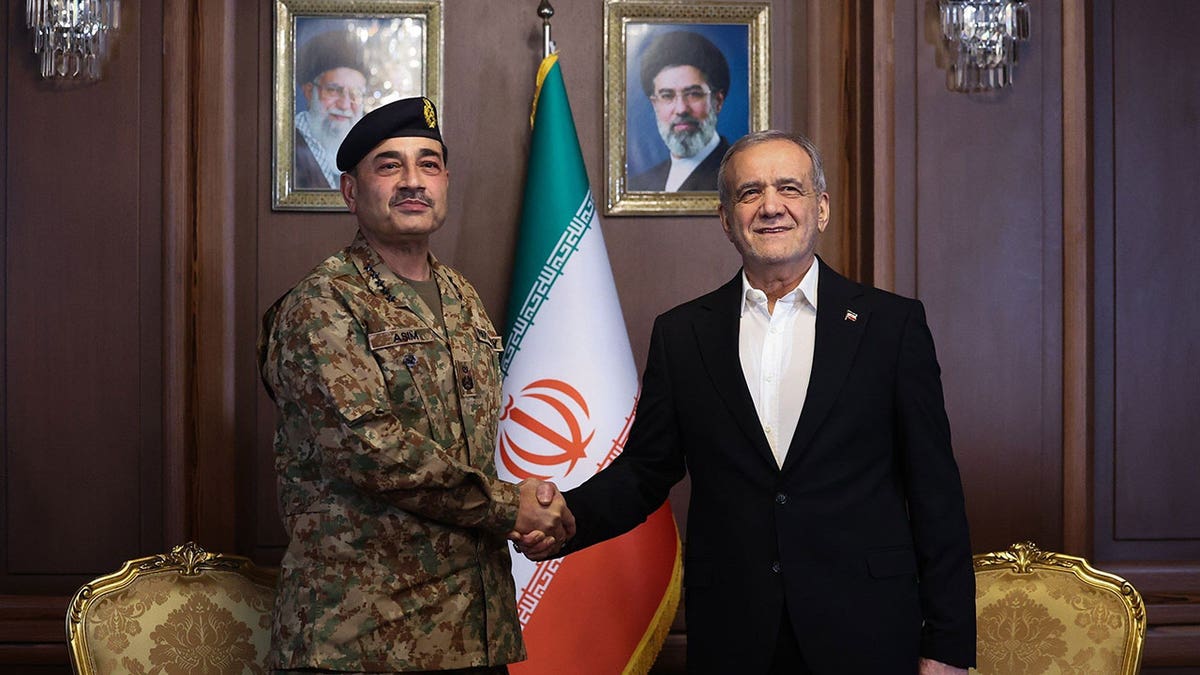
Few foreign figures appear to have closer ties to both Trump and Iran’s military hierarchy. (Iranian Presidency/Handout/Anadolu via Getty Images)
“He remains a figure at the international level who has personal interactions, a personal equation in the intelligence community in Iran, in the military hierarchy in Iran, in the diplomatic corps of Iran and also on the side of the political leaders,” Saeed said.
That long-standing relationship appears to explain why Iran gave him such a warm welcome, even as he remains in direct contact with Trump and his team.
Bill Roggio of the Foundation for Defense of Democracies told Fox News Digital: “Trump should not trust the Pakistanis. Pakistan was a perfidious ‘ally’ in Afghanistan, backing the Taliban while pretending to be our friends. Munir’s ties to the IRGC should be a huge red flag for the Trump administration.”
Munir’s relationship with Trump dates back to the India-Pakistan crisis of May 2025. Munir played a key role in helping to de-escalate the confrontation, and Pakistan later formally nominated Trump for the Nobel Peace Prize, a move Pakistani analysts widely believe was encouraged by Munir.
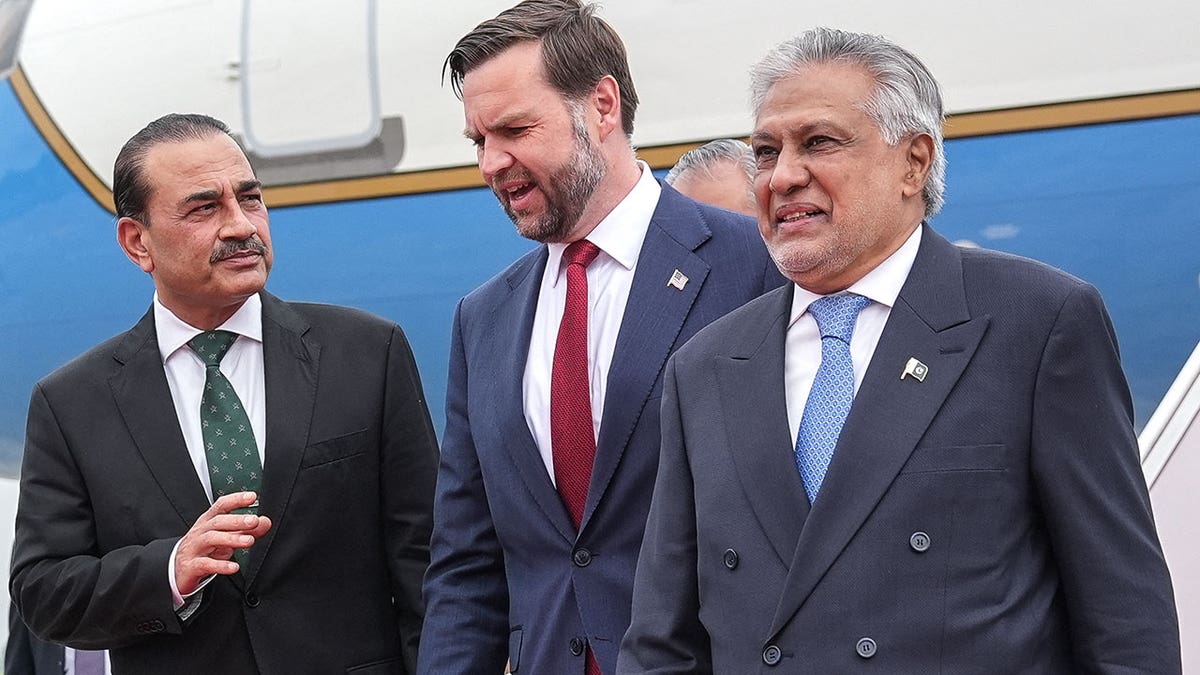
Pakistan’s Asim Munir has become one of the few foreign officials trusted by both President Donald Trump and Iran’s security establishment, according to Pakistani analysts and officials. (Jacquelyn Martin/POOL/AFP via Getty Images)
Since then, Trump has repeatedly praised him, calling Munir an “exceptional man,” a “great fighter” and “my favorite quarterback.”
Pakistani officials and media reports say the two men are now speaking directly.
Pakistani analyst Raza Rumi told Fox News Digital that Munir’s appeal to Trump is not surprising.
“Trump has long shown a preference for strong, decisive leaders,” Rumi said. “Munir fits that mold as a centralized authority figure who can drive results.”
WHY TRUMP AND IRAN LOOK LIGHT YEARS AWAY ON ANY POSSIBLE DEAL TO END THE WAR
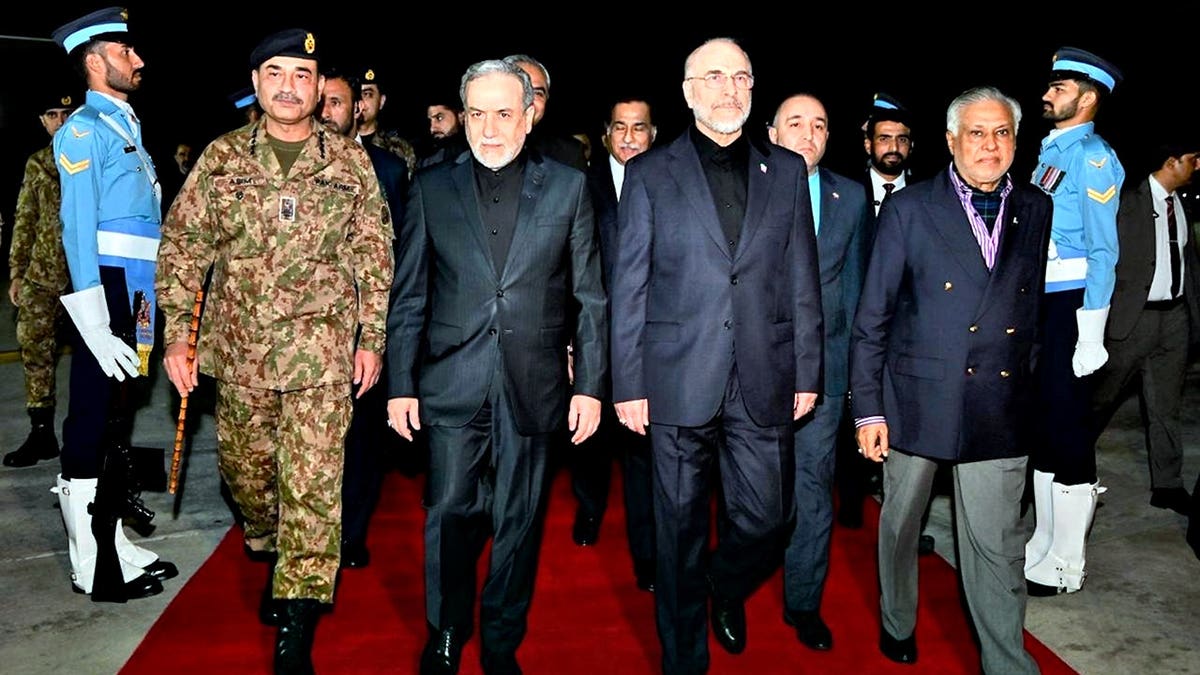
Iran’s Parliament Speaker Mohammad Bagher Qalibaf and Foreign Minister Abbas Araghchi were received by Pakistan’s Foreign Minister Ishaq Dar and Army Chief Field Marshal General Asim Munir upon arrival at Nur Khan Air Base in Rawalpindi, Pakistan, on April 11, 2026. (Pakistan Ministry of Foreign Affairs/AP)
Rumi described Munir as “a disciplined, institution-first leader with a strong emphasis on order, hierarchy and strategic clarity.”
“Unlike more charismatic military figures in public, his style is relatively low-key, shaped by intelligence work and operational experience rather than overt political signals,” Rumi said.
Munir’s background helps explain both his style and his influence.
Munir studied at the Fuji School in Japan, the Command and General Staff College in Quetta, the Malaysian Armed Forces College in Kuala Lumpur and Pakistan’s National Defense University, where he earned a master’s degree in philosophy in public policy and strategic security management, according to Pakistan’s Geo News. Munir was the first army chief in Pakistan to be awarded the Sword of Honour, the highest military distinction for a cadet. The outlet also described him as an avid reader, traveler and athlete.
Munir is also a Hafiz-e-Quran, which means he has memorized the entire Quran by heart.
Munir, former head of Pakistan’s Military Intelligence and Inter-Services Intelligence agencies, spent years overseeing Pakistan’s most sensitive regional relations, including Iran, Afghanistan and India.
TRUMP AGREES TO 2-WEEK CEASEFIRE IF IRAN OPENS STRAIT OF HORMUZ
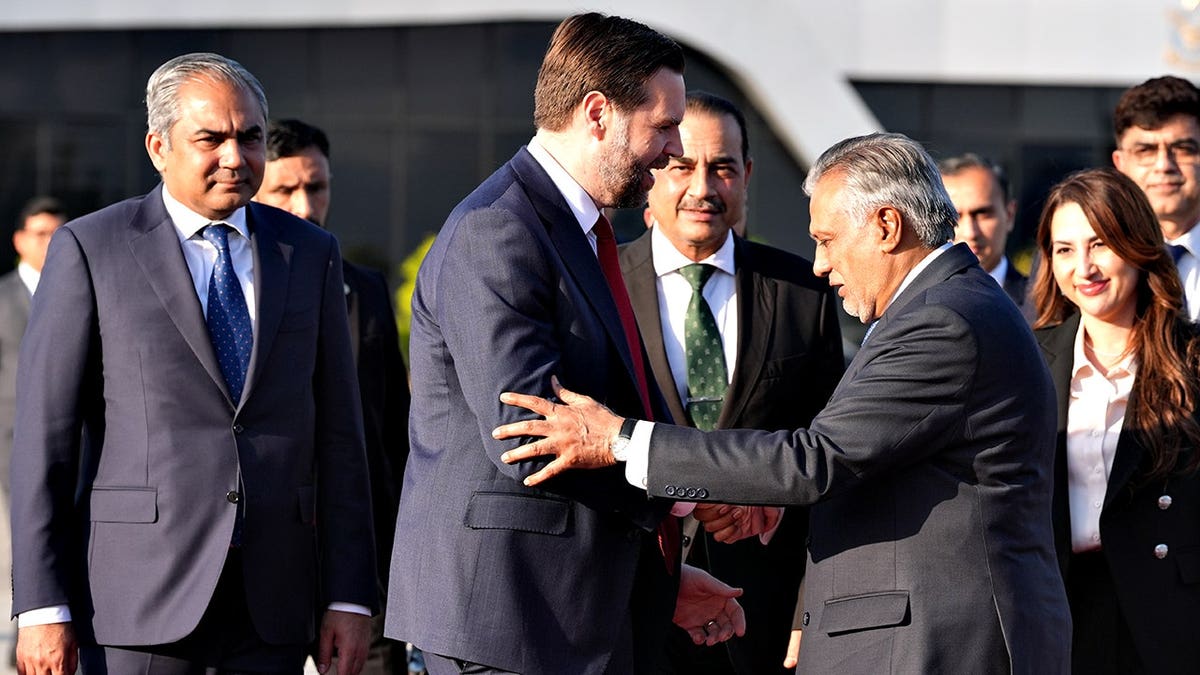
Vice President JD Vance shakes hands with Pakistani Deputy Prime Minister and Foreign Minister Mohammad Ishaq Dar in Islamabad on April 12, 2026, after talks on Iran. Pakistani Interior Minister Mohsin Naqvi, Chief of Defense Forces Chief of Army Staff Field Marshal Asim Munir, and U.S. Embassy Chargé d’Affaires Natalie A. Baker look on as Vance prepares to board Air Force Two. (Jacquelyn Martín/AP)
In 2025, after the India-Pakistan crisis, he was elevated to field marshal, the first Pakistani officer to hold that rank since former military ruler Ayub Khan.
Pakistani officials say that later that year, he was also given the newly created title of chief of defense forces, further cementing his authority above the country’s military branches.
Munir rarely gives interviews, but his speeches offer clues about his worldview.
WHO ACTUALLY LEADS IRAN RIGHT NOW? KEY POWER PLAYERS AS TRUMP CLAIMS TALKS TO ‘TOP’ OFFICIAL
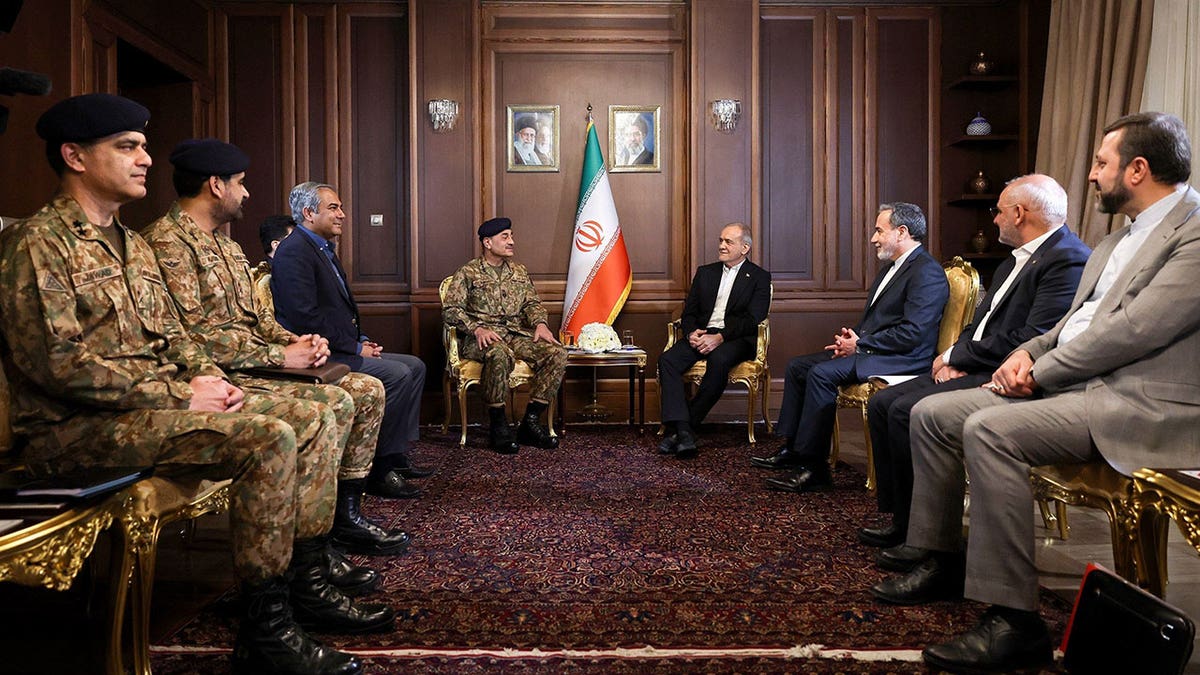
Munir, former head of Pakistan’s Military Intelligence and Inter-Services Intelligence agencies, spent years overseeing Pakistan’s most sensitive regional relations, including Iran, Afghanistan and India. (Iranian Presidency/Handout/Anadolu via Getty Images)
At the Margalla Dialogue held in Islamabad in November 2024, he warned that “the absence of adequate standards for freedom of expression is leading to the deterioration of moral values in societies around the world.”
The commentary reflected a broader emphasis on order, discipline, and centralized authority.
Rumi said Munir operates from “a transactional and state-centric worldview, rather than an ideological one.”
However, critics argue that his rise has come at a cost to Pakistan’s democracy.
After becoming army chief in 2022, Munir focused primarily on domestic politics, including what critics described as a crackdown on political opposition and an unprecedented concentration of military power, according to The Guardian, which reported that key negotiations with the United States and Iran have been coordinated not from Islamabad, Pakistan’s civilian capital, but from Rawalpindi, the army headquarters.
CLICK HERE TO DOWNLOAD THE FOX NEWS APP
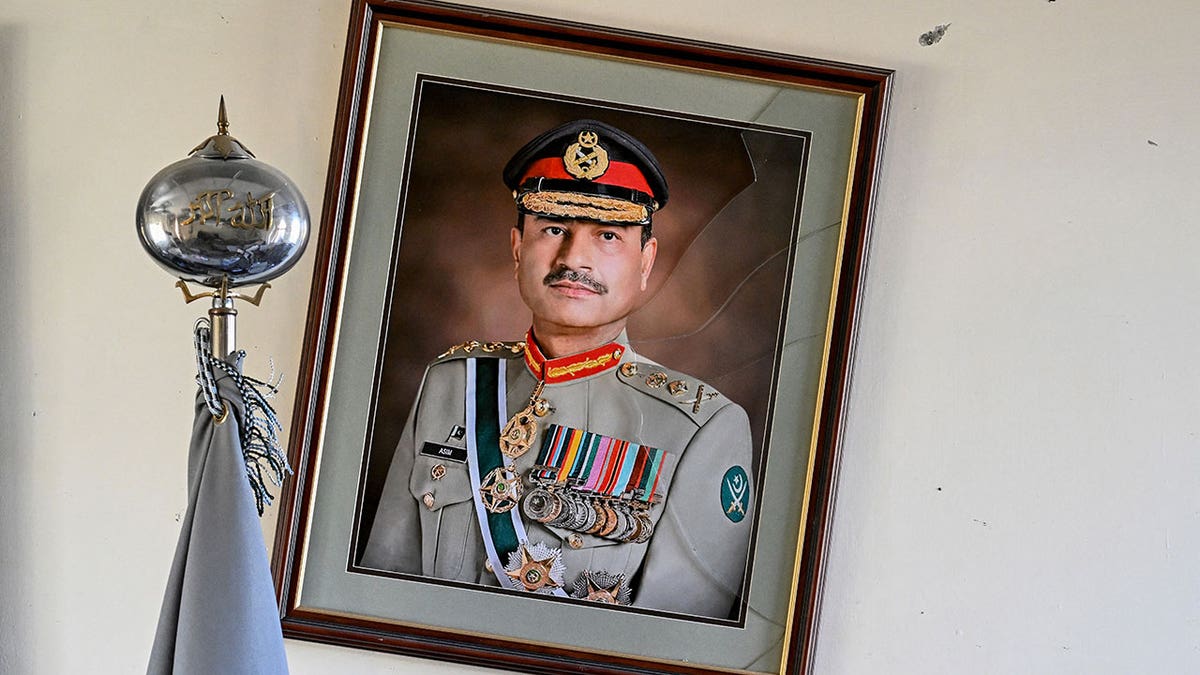
A broken frame of Pakistan Field Marshal and Army Chief Asim Munir hangs on the wall after an attack on Cadet College Wana, an army-linked school, in South Waziristan district near the Pakistan-Afghanistan border, November 13, 2025. (Aamir Qureshi/AFP via Getty Images)
Critics say this reflects a broader reality: Pakistan’s foreign policy is increasingly led by the military rather than the elected government.
Rumi said Munir’s rise reflects “the military leadership increasingly eclipsing the civilian one in Pakistan.”
As the current negotiations continue, a lot appears to depend on Munir. Saeed said that’s because Munir has spent years building trust on both sides and is unlikely to stop now.
“Knowing our quarterback, and my personal knowledge of him, he’s relentless. He wouldn’t give up,” Saeed said.