


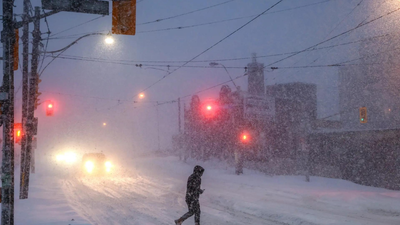
At least 25 people have died as a colossal winter storm battered much of the United States, dumping heavy snow in the Northeast and leaving lingering destruction in the South, where freezing rain left hundreds of thousands of people without power.The end of the storm brought new snowfall across the Northeast on Monday, with more than a foot of snow stretching across a 1,300-mile swath from Arkansas to New England, as cited by the AP.
Light to moderate snowfall was expected to continue in New England through Monday night.Travel was severely affected, flights were canceled and schools closed due to deep snow and bitter cold. The National Weather Service said areas north of Pittsburgh recorded up to 20 inches of snow, with wind chills dropping to -25 degrees Fahrenheit Monday night into Tuesday.Authorities reported deaths related to snowplow accidents in Massachusetts and Ohio, sledding incidents in Arkansas and Texas, and cases linked to exposure, including eight people found dead outdoors in New York City over the frigid weekend.More than 700,000 customers were still without power Monday, and Tennessee, Mississippi, Louisiana and Texas were among the hardest-hit states.Nashville Electric Service, the country’s hardest-hit utility, according to poweroutage.us, said it will “double its workforce by noon Monday, with nearly 300 line workers deployed across our service area,” as cited by ABC News. Parts of Mississippi were struggling to recover Monday after what officials described as the state’s worst ice storm since 1994, as authorities rushed to supply cots, blankets, bottled water and generators to warming centers in the hardest-hit areas.At the University of Mississippi, most students were without power, causing classes to be canceled for the entire week. The Oxford campus was still covered in ice, making conditions dangerous. Oxford Mayor Robyn Tannehill said on social media that the extent of the damage was so extensive that “it looks like a tornado has leveled every street,” with downed trees, branches and power lines scattered throughout the city.New York City saw its heaviest snowfall in years, with 11 inches (28 centimeters) covering Central Park. While most major roads were largely cleared Monday morning, pedestrians struggled on snow-covered sidewalks and several subway lines with above-ground tracks suffered delays.Air travel was also severely affected, with more than 8,000 flight delays and cancellations reported across the United States on Monday, according to flight tracker FlightAware. The situation was even worse a day earlier, when 45 percent of U.S. flights were canceled, the highest cancellation rate since the COVID-19 pandemic, data from aviation analytics firm Cirium showed.