



The signing of the US-Iran peace deal and full opening of the Strait of Hormuz, if successful, would bode well for the availability of crude oil supplies globally. According to executives of Indian refining companies, if the proposed US-Iran agreement is formally signed on Friday and shipping through the Strait of Hormuz resumes, crude oil supplies could normalize and benchmark prices could fall below $80 a barrel within the next two to three weeks.The United States and Iran have reached an understanding aimed at ending the military conflict, lifting the US naval blockade of Iran, and restoring navigation through the Strait of Hormuz. The two sides also agreed to continue talks for the next 60 days in an effort to resolve outstanding issues related to Iran’s nuclear program. Brent crude fell 5% to around $83 a barrel on Monday following news of the agreement.Before the outbreak of the conflict, the Gulf region supplied about 40% of India’s crude oil imports. After the war began on 28 February, inflows from the area declined rapidly. While imports from Saudi Arabia and the United Arab Emirates largely recovered after initial declines, supplies from Iraq, Kuwait and several other producers remained under considerable pressure.Read this also ‘Let the oil flow’: What does Trump’s possible peace deal with Iran, opening of the Strait of Hormuz mean for India?
What does this mean for India’s oil supply?
Industry officials hope the strait will reopen once the agreement is signed. A refinery executive told ET that if the US Navy and Iran’s Revolutionary Guard both abide by the agreement and avoid actions that could derail the process, the oil market could stabilize within 15 to 20 days.

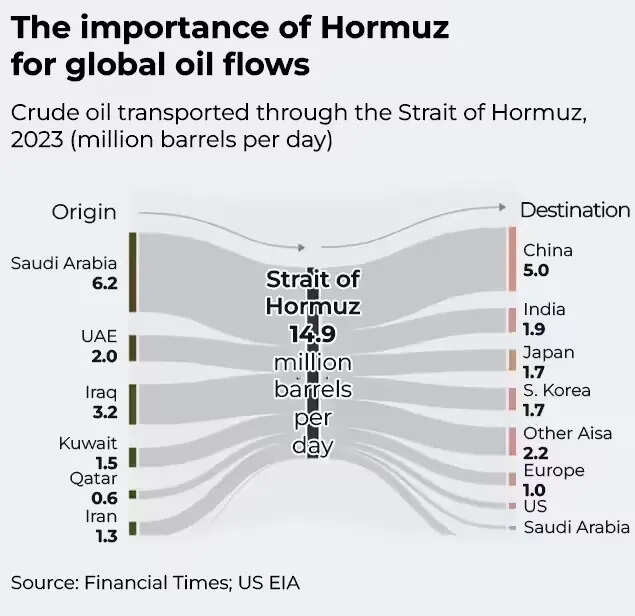
The executive said that in such a scenario, Brent crude prices could fall below the level of $80 per barrel.Reopening the waterway will allow oil tankers stuck in the Persian Gulf to resume deliveries to consumer markets.Additionally, producers are believed to have ample amounts of crude oil in onshore storage facilities and will move quickly to ship those supplies once normal trade routes are restored.For India, geographical proximity to the Gulf could translate into quick access to adequate crude supplies, according to refinery officials. An industry official said this could reduce the country’s dependence on long-distance shipments coming from markets such as the United States and Russia.The executive also said damage to oil production infrastructure across the Gulf region appears to be limited, suggesting facilities could restart relatively soon.As a result, crude oil supplies from the region may recover faster than many market participants currently expect.Industry officials further noted that additional output from OPEC+ producers, coupled with the return of Iranian crude to international markets, will help ease supply constraints and put downward pressure on global oil prices.He said that with the end of hostilities, the lifting of sanctions on Iran and greater availability of oil tankers, freight and insurance costs associated with energy shipments are likely to decline significantly.However, the same pace of recovery may not extend to liquefied natural gas (LNG) and refined petroleum products, where the disruption could last longer.