


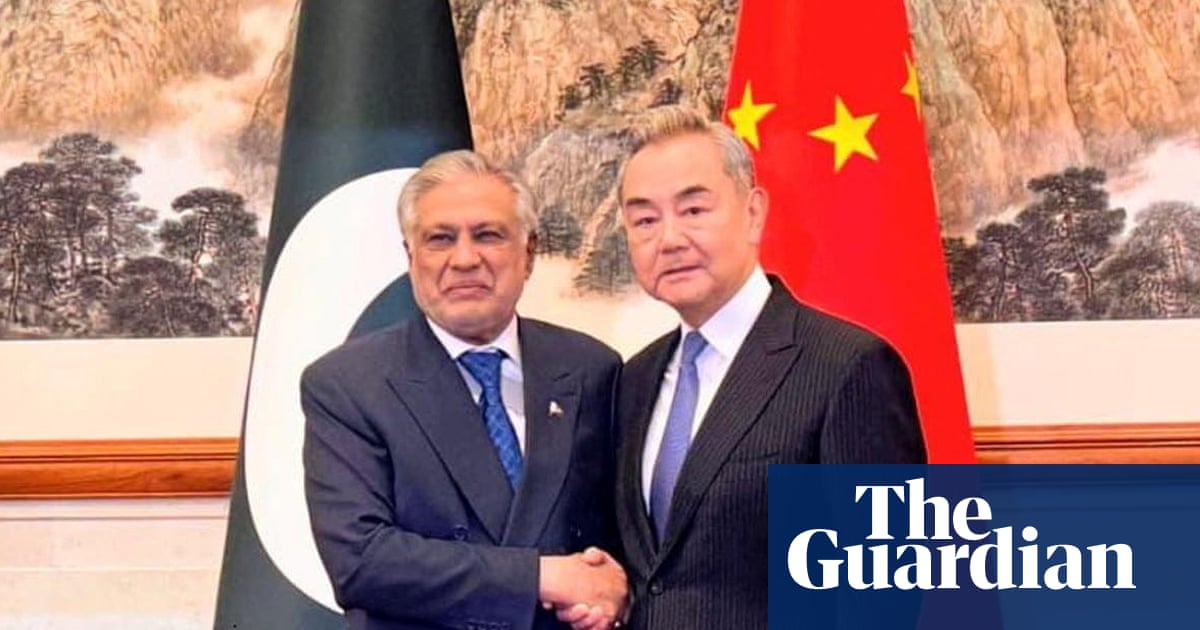


myEvery conflict presents an opportunity, at least from China’s perspective. As Beijing faces scrutiny for not openly backing its strategic partner Iran, Chinese media and social media have highlighted Pakistan’s offer to mediate in the conflict between the United States, Israel and Iran.
Islamabad is serving as a convenient intermediary through which it can project influence without getting directly involved. Chinese comments and online chats are now actively amplifying the narrative that Pakistan is one of the few countries that Washington and Tehran trust, and that it has the support of the main regional powers. On Weibo, the label ‘China responds to Pakistan’s willingness to mediate between the United States and Iran’ has racked up millions of views.
Pakistan as a credible mediator
The Chinese comments highlight several reasons why Pakistan is seen as a credible intermediary. Writing in Guangming Daily, reporter Yang Runfu He noted that while direct engagement between the United States and Iran remains uncertain, Pakistan – with support from countries such as Egypt and Turkey – has emerged as an important conduit.
Show full article
A key element of the emerging chinese narrative it is Pakistan’s perception of access and neutrality. It also places Islamabad within a broader alignment with Türkiye, Egypt and Saudi Arabia: a flexible configuration that combines military capabilities, nuclear deterrence and Gulf financial resources.
central to this speech it is Pakistan’s perceived ability to keep communication channels open across divisions. chinese media note that just before the outbreak of hostilities, Pakistan’s leaders, including Army Chief Field Marshal Asim Munir and Prime Minister Shehbaz Sharif, traveled to Iran to meet senior officials.
Since tensions rose, Chinese comments have portrayed Pakistan maintains a balanced and communicative stance, positioning it as capable of facilitating dialogue not only between the United States and Iran, but also potentially involving Israel. Analysts frame this role as a product of geography, historical ties, and accumulated trust: Pakistan’s long border with Iran creates enduring interdependence, while decades of counterterrorism cooperation with the United States have created institutional familiarity.
A Chinese commentator summarized Pakistan’s mediating role in three dimensions:
- Access: Pakistan maintains functional channels with both Washington and Tehran.
- Relative neutrality: Free of US bases and not seen as closely aligned with Washington like some Gulf states, Pakistan eases Iranian concerns. Its nuclear status adds a layer of deterrence and autonomy.
- Self-interest: A conflict between the United States and Iran, especially disruption in the Strait of Hormuz, is threatening Pakistan’s energy supplies, raising oil prices and putting pressure on its economy. From this perspective, mediation has now become a strategic necessity.
TO post on weibo categorized Pakistan’s close ties with Washington as the basis. According to one user, the two countries have maintained close military and political cooperation for decades, and the current administration has a good personal relationship with US President Donald Trump.
Some commentators even frame Pakistan as an “active stabilizer”. Liu Zong Yidirector of the Center for South Asian Studies at the Shanghai Institute of International Relations, notes that Pakistan condemns US and Israeli actions against Iran while avoiding offending Washington, and its ties with Israel remain weak.
As the only Muslim-majority state with nuclear weapons, it is seen by many Muslim countries as a possible counterweight to Israel, adding pressure. Pakistan also faces Saudi demands to defend or counter Iran, but is reluctant to openly align itself with the United States and Israel, preferring a mediating role.
Meanwhile, Iran, he argued, could favor Pakistan amid tense Arab relations and low trust in the negotiations. In his view, Pakistan has become an acceptable “greatest common divide” for the Gulf states, Iran and the United States, although Turkey and others could also play a role.
Also read: India’s aim to isolate Pakistan faces setback
Exaggerated role?
China’s support for Pakistan’s mediation has a strategic purpose. By singling out Islamabad, Beijing grants it international legitimacy while staying away from direct involvement. chinese comment contrasts Pakistan with India, which is largely absent from this space due to its apparent alignment with Israel.
Some analysts argue that Islamabad’s participation in the peace talks has made New Delhi restless. A successful ceasefire facilitated by Pakistan could improve its international standing and undermine India’s regional strategy.
long dingprofessor at the Institute of Middle East Studies at Shanghai University of International Studies, suggests that while both the United States and Iran should be willing to negotiate, and there are mediators such as Pakistan, Turkey and Egypt, any talks are likely to be extremely difficult. Other observers describe Pakistan’s move from the “periphery” to the “center” of regional diplomacy is notable.
Still, a Chinese commentator precautions That discussion about Pakistan’s role may be overblown. Its earlier success in facilitating rapprochement between the United States and China in the 1970s was largely due to the political will of Washington and Beijing, where Pakistani diplomacy had a small role to play.
Today, those conditions are absent. Deep mistrust, the United States’ limited appetite for concessions, and Iran’s fear of escalation limit meaningful progress. Signals from the United States and Israel about the persistent use of force reinforce Tehran’s skepticism. Unlike the quiet, trust-based diplomacy of the past, today’s engagement appears more public and performative, with the United States projecting strength, Iran showing defiance, and Pakistan asserting its relevance.
While several Chinese observers emphasize Pakistan’s neutrality and accession as reasons for being a successful mediator, its actual influence is limited. It can provide a venue and maintain channels with multiple parties, at best, but it lacks the strategic and economic weight to determine the outcomes of a US-Iran confrontation. Much of its “stabilizing” role is symbolic and depends on the willingness of the United States, Iran and Israel to participate.
The Chinese narrative can amplify Pakistan’s importance, but it cannot ignore the structural limitations that limit its real impact.
Sana Hashmi, PhD, is a member of the Taiwan-Asia Exchange Foundation. She tweets @sanahashmi1. Opinions are personal.
(Edited by Ratan Priya)


