


Who was Shivaji? It is a question rooted more in historical research than in heroic pride. A number of previously made Marathi films have detailed the clever conquests of the Marathi warrior king, whose strength lay in his innovative use of military tactics and his confidence in outwitting the powerful opponent with limited resources. All this makes Shivaji a great soldier, but what makes him a great king, whose intrepid spirit is immortalized through folk songs and legendary tales passed down from generation to generation?

As Govind Pansare’s seminal book tells us, Shivaji’s greatness lies not only in his iron valor on the battlefield but in his multiple attempts to build a Swarajya or self-government where empathy reigned, justice prevailed and equity became the norm. The people, affectionately referred to as Indian peasant and composed mainly of farmers and peasants, they considered it theirs because of its dedicated efforts to undo all the evils inflicted upon them by an oppressive system. That is why soldiers like Bajiprabhu Deshpande and Tanhaji Malusare were willing to sacrifice their lives for him, as his cause for Swarajya It became his cause for liberation. Shivaji’s popularity among the common masses was due to the genuine concern he showed for improving their living conditions. Popular culture, however, views him through the singular lens of a warlord, denying the expansive nature of his ideas and their rightful place in history.
Deshmukh Ritual Raja Shivaji He tries to change that as we glimpse the king’s humanity during a crucial moment. A teenage Shivaji is moved to tears when an old woman belittles his stature and complains about the destruction caused by Adil Shahi and Nizamshahi forces in Pune. The next day, Shivaji claims the city’s honor by moving a golden plow across the land, a symbolic gesture that creates a sense of tranquility among the masses. Later, in another scene, an enraged Shivaji cuts off the hands of an arrogant Patil for raping a woman.
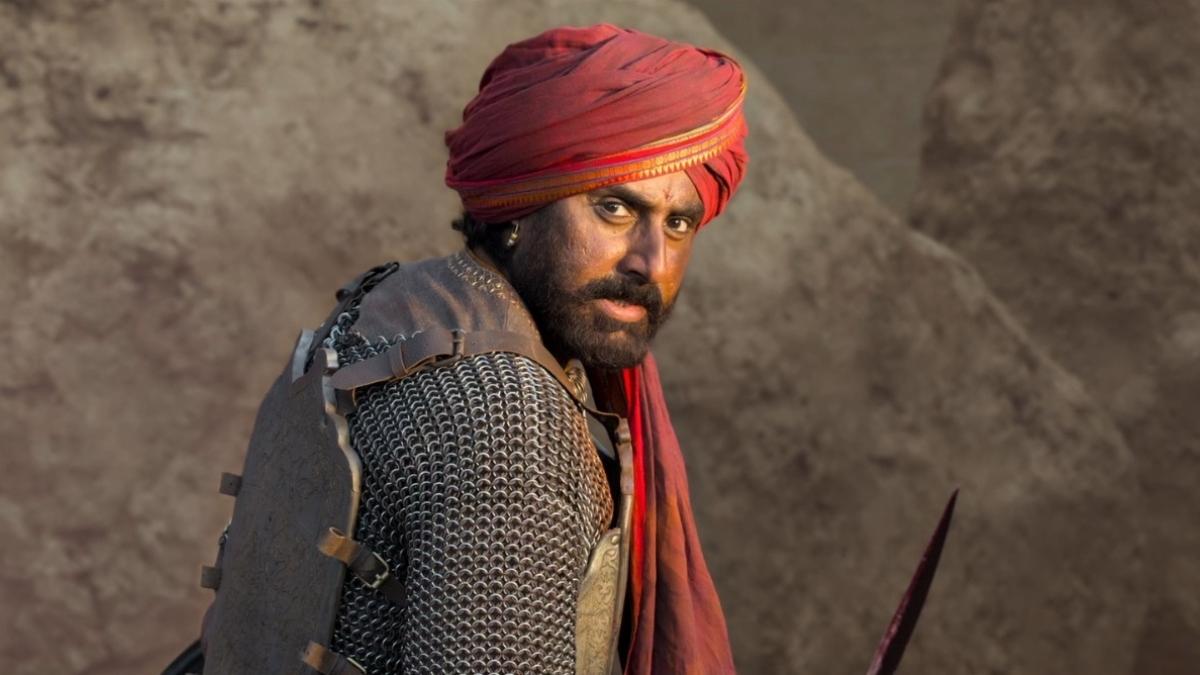
Abhishek Bachchan as Sambhaji Bhosle in a still from the film | Photo Credit: JioStudios
Deshmukh shows some willingness to understand the core of the Maratha king. However, these are even quicker moments whose effect does not lend its soul to Shivaji’s personality. Cinema is increasingly reverential towards him from the moment of his birth, when an image of his tiny member rises over charged background music. Shivaji (Riteish Deshmukh) is born at a time when his father, Shahji Bhosle (Sachin Khedekar), served in the Adil Shahi dynasty. He shows signs of bravery as a child, infused with ideas of self-rule by his brother, Sambhaji Bhosle (a sincere Abhishek Bachchan). Their relationship forms the core of the first half, with long action sequences and overly dramatic dialogue underscoring their rebellious nature.

Raja Shivaji (Marathi)
Director: Deshmukh Ritual
Cast: Riteish Deshmukh, Sanjay Dutt, Abhishek Bachchan, Sachin Khedekar, Genelia Deshmukh, Jitendra Joshi, Fardeen Khan and Vidya Balan
Execution time: 3 hours 15 minutes
Synopsis: In the mid-16th century, a young Shivaji rises to conquer enemy territory and establish his self-rule while fighting against the Adil Shahi commander, Afzal Khan.
Deshmukh takes a long time to reveal the adult version of Shivaji, as myth-making takes priority over emotional resonance. When we first see him, Deshmukh’s Shivaji flies onto the battlefield to attack incoming enemies, in a sequence that runs steadily as Ajay-Atul’s operatic theme reminds us of the legend of this warrior. The theatrics, however, do not produce much effect as the essence of Shivaji’s ideals remains absent for the most part. It is also difficult to imagine Deshmukh as the Maratha chief, although the actor remains earnest in his performance. His presence on screen does not entirely coincide with the popular memory of the king. Therefore, no amount of extreme slow motion shots can convince us otherwise.
The film is otherwise thoughtfully shot by Santosh Sivan, and the flickering lights and shadows add a new dimensionality to the images. The cinematography also avoids overly villainizing Muslim rulers, as in Vicky Kaushal. chaavawhich added a distinctive nuance to Akshaye Khanna’s Aurangzeb scenes. Deshmukh is not one to create a vile binary divide in history, but he is also not one to delve into the complexities, as we see the Mughal emperor Shah Jahan reduced to his worst caricature by Fardeen Khan and the other Adil Shahi rulers portrayed as completely stupid buffoons. However, Sanjay Dutt gets his dose of style by instilling his ultimate villain spirit in Afzal Khan, a man personified as evil through popular ballads.
It is also the much mythologized confrontation between Afzal Khan and Shivaji that brings the film back into action after a series of lethargic sequences midway through. The final act generates excitement because of the tact with which Shivaji conducted the negotiations with Afzal, breaking him not with the stroke of his sword but with the sharpness of his intellect. Deshmukh shows promise as a director in these parts, focusing on smaller details that blend well with the editing to keep the excitement going, right up to the final moment of victory when he stabs Afzal Khan with his Bagh Nakh. It seems a fitting conclusion, especially when Deshmukh and the writers superimpose Afzal’s image with that of an elephant who wants to conquer the forest, while his giant ego is attacked by Shiva, the lion.

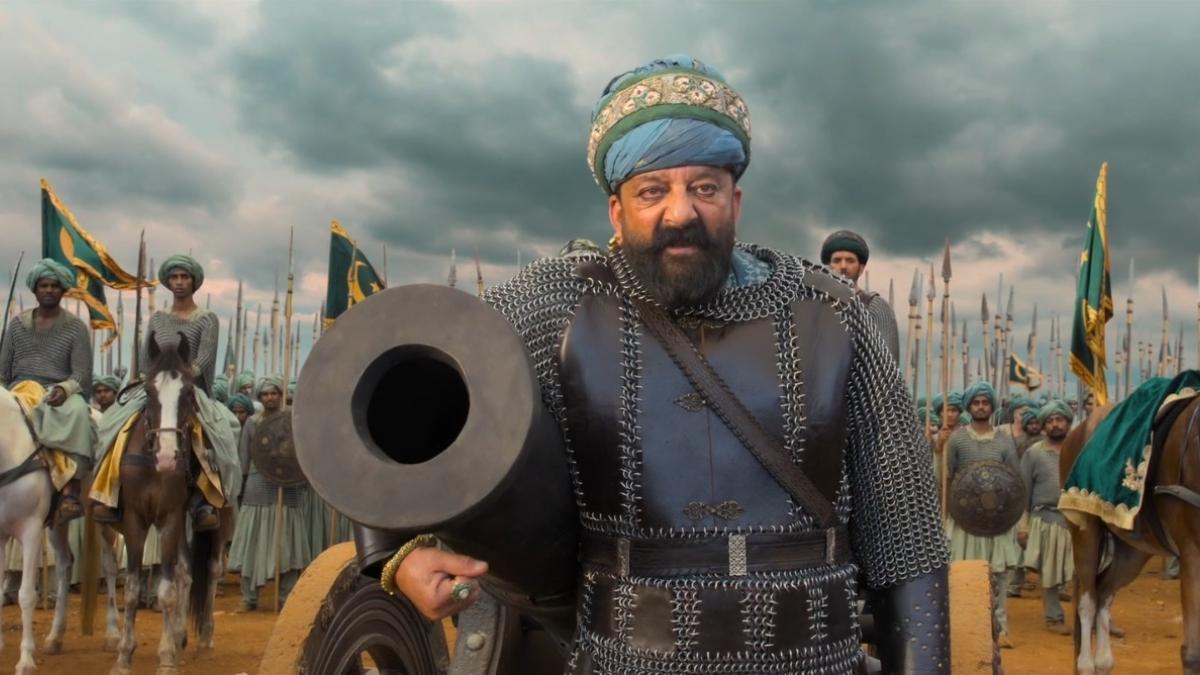
Sanjay Dutt in the movie | Photo Credit: JioStudios
Beyond the metaphors, however, the depiction of Shivaji barely scratches the surface. Deshmukh is largely content to glorify the king rather than investigate the nature of his glory. The efforts of making a conventional biopic turn the historical icon into a one-dimensional hero, waging a generic battle between good and evil while aesthetics kneel in his honor. The other side of the king, much more relevant to contemporary times, reflected in the moving letter he wrote to Aurangzeb or in the multicultural nature of his army, remains largely hidden beneath the external nuances of the story. As the film ends with slogans in honor of Shivaji, the question still prevails: who really was Shivaji?
Raja Shivaji is currently playing in theatres.
Published – May 1, 2026 05:40 pm IST


![Raja Shivaji Box Office Collection: ‘Raja Shivaji’ Box Office Collection Day 3 [LIVE]: Riteish Deshmukh starrer inching towards 30 crore mark on first Sunday | Hindi Movie News
& more related news here](https://i2.wp.com/static.toiimg.com/thumb/msid-130729462,width-1280,height-720,imgsize-70148,resizemode-6,overlay-toi_sw,pt-32,y_pad-600/photo.jpg?w=1200&resize=1200,0&ssl=1 "Raja Shivaji Box Office Collection: ‘Raja Shivaji’ Box Office Collection Day 3 [LIVE]: Riteish Deshmukh starrer inching towards 30 crore mark on first Sunday | Hindi Movie News
& more related news here")