


New Delhi: The Center on Wednesday said it is in touch with the United States regarding the Section 301 investigation linked to concerns over forced labor and excess industrial capacity.Earlier, the Office of the United States Trade Representative (USTR) had named India among the countries it believes follow unfair trade practices. Based on its findings, USTR has proposed additional tariffs of 10% to 12.5% on imports from the countries concerned.This development comes as India and the US continue talks on a bilateral trade agreement.Also read: More Trump tariffs? Amid trade deal talks, US names India in Section 301 findings; proposes additional dutiesUSTR’s findings were based on 60 investigations conducted under Section 301. It includes India among 54 economies that, according to a US assessment, do not have strong enough measures to prevent imports of goods allegedly made using forced labour.
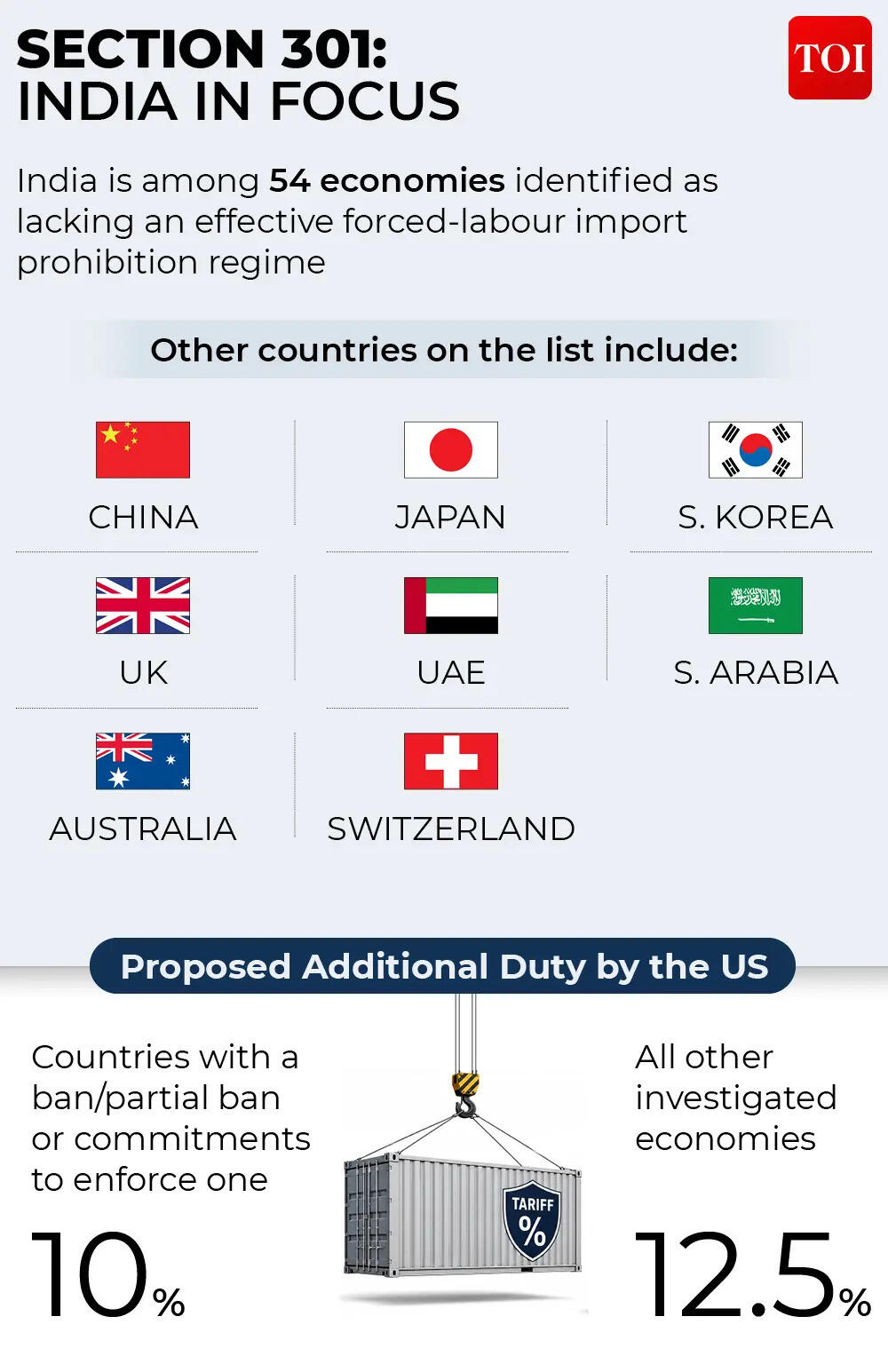
On June 2, the USTR released its findings from the forced labor investigation and proposed additional tariffs on imports from 60 economies.Under the proposal, imports from Canada, Ecuador, the European Union, Indonesia, Mexico and Pakistan would face 10% tariffs. Imports from 54 other economies, including India and China, will be subject to a higher tariff of 12.5%. Pakistan and Indonesia are among India’s major competitors in global trade.The proposed tariff has not yet been finalized and is open for further consideration.Responding to the development, the Commerce Ministry said, “India is engaged with the US on this matter as a part of the Section 301 proceedings. As announced on 2 February 2026 and as per the joint statement issued on 7 February 2026, India is parallelly engaged with the US to finalize a framework agreement.”


