


It was 2018. I was in grade 12, but more than the anxiety of board exams, I found myself celebrating a year that belonged to Vicky Kaushal. A year earlier, Rajkummar Rao had a similar breakthrough moment, but it was nowhere near the sweep that Kaushal had. Five films in a single year, each one different, each one testimony to a long-awaited talent. On the one hand, she almost stole Sanju from Ranbir Kapoor, bested Alia Bhatt in Raazi; On the other hand, he became the perfect third point in the restless geometry of Manmarziyaan, while at the same time he starred in leading moments with a certain charm in Love Per Square Foot and Lust Stories. Fate, it seemed, was at the same time. Uri: The surgical strike would continue next yeara box office triumph destined for the stars.
Since then he has known the valleys next to the peaks. At times, it has inhabited propagandist cinema, producing returns that are as certain as they are vast but also very worrying for the social ethos. In others, he has become a voice of conscience in The Great Indian Family and, in between, he has simply entertained, elevating another Raju Hirani cartoon in Dunki. Today, as he turns thirty-eight, it is worth tracing the arc of his defining performances. In an industry increasingly dominated by Singhs and Kapoors, with Aryans, Raos and Khurranas competing for space, Kaushal reminds us that there is always room for a presence that surprises, that disturbs and that, eventually, has the last laugh.

So here we go! Kaushal’s five best performances:
5. Masaan
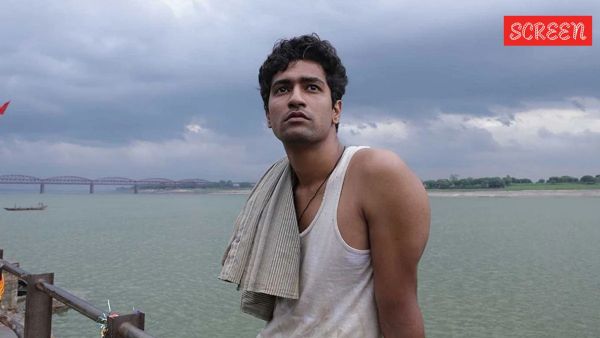 A still from Masaan.
A boy in love. A lower-caste youth tormented by the boundaries that society has drawn around him. Much has been said about Kaushal’s outstanding performance in Neeraj Ghaywan’s Masaan. Much more will be said in the years to come. “Ye dukh kahe khatam nahi hota bey?” It became a meme for a generation, stripped of its harsh reality. But Deepak’s pain was never just a line; it was embedded in the very grammar of first love. The excitement of seeing the person you like on Facebook, the nervous anticipation of sending them a friend request, the simple pleasure of being at melas, the delicate discomfort of choosing a gift, the fleeting ecstasy of catching a glimpse of them in a crowd, the shy poetry of gestures that speak louder than words. These small, dizzying moments largely defined his existence. Thus, the most unforgettable moment arrives when he makes a balloon fly across the square, hoping that she will notice it much later, only to discover her lifeless body through the ring she was wearing. It is a brutal awakening. Deepak comes of age before he even asks for it. A portrait of a boy forced, without mercy, to become a man.
4. Manmarziyaan
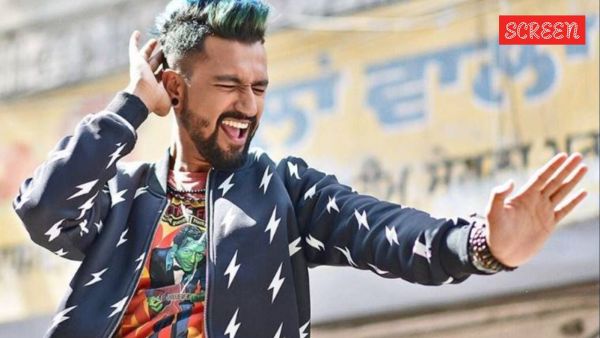 A still from Manmarziyaan
A male child. A lost lover. Confusion is the soul of Anurag Kashyap’s Manmarziyaan, where Kaushal inhabits one apex of a love triangle that is kinetic yet anxious, euphoric yet turbulent. DJ Vicky Sandhu could easily have been an archetype, a commitment-phobic cliché. In fact, in other hands, the character might well have descended into villainy or worse youthful madness. But in Kaushal’s hands, it is charged with empathy, burdened by the struggle to reconcile desire with fear. In his hands it becomes a conscience trapped in its own indecision. His arc insists on the interiority of a man unable to bridge the gap between desire and action. Thus, at his most touching moment, right in the interval, where Rumi (Taapsee Pannu), is waiting for him and he arrives. But he can’t muster the courage to take her away. The music grows, the tears flow and in his eyes a generation of lovers suspended between letting go and holding on is captured. A portrait of a man who abandons his childhood habits.
Read also | Dhurandhar 2: Aditya Dhar genuflects and the story sinks into submission
3. Raman Raghav 2.0
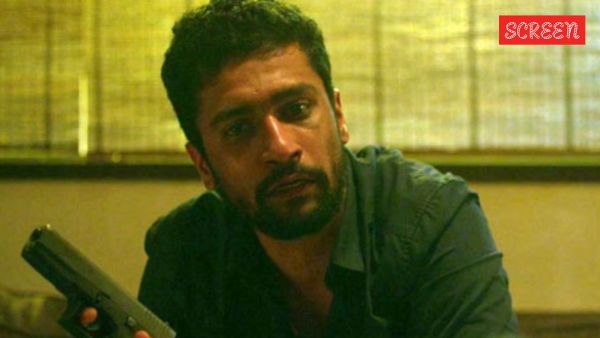 A still image of Raman Raghav 2.0.
A corrupt and melancholic police officer. A son who slowly sinks into silence. Kaushal inhabits the darkest corners of Kashyap’s Raman Raghav 2.0, a serial killer thriller that the world hailed for Nawazuddin Siddiqui’s stupendous portrayal of Raman. But in truth, it is Raghav, through Kaushal’s tormented lens, who forms the fulcrum of the film. The film was never a study of the psyche of a killer. It was always a story of unraveling, of a cop descending through layers of moral decay, of a conscience eroding. He insists on this from the first frame, when he announces, quite loudly, that it is not Raman, but Raghav, the image in which the chaos of Raman is reflected and completed. Thus, his most searing moment comes when Raghav faces himself in the mirror, a reflection from which he cannot escape, after his partner has shown him the magnitude of his own desolation. A portrait of a man in absolute free fall.
Story continues below this ad.
2.Raazi
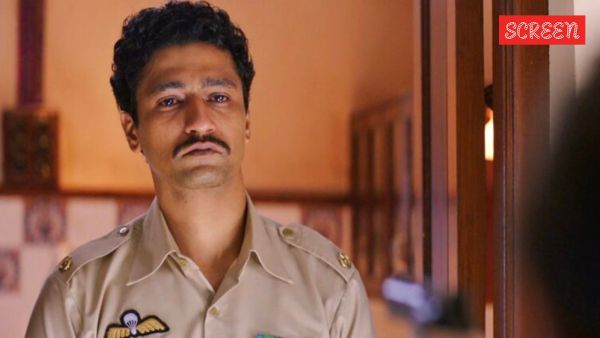 A still from Raazi.
A shy army officer who discovers love. A husband caught between duty and devotion. Meghna Gulzar’s Raazi was, above all, always a love story: not necessarily about loyalty to the nation, but about two star-crossed lovers brought together by circumstance. Alia Bhatt dominates the screen as Sehmat, but it is Kaushal’s Iqbal who forms the moral axis of the film. The tragedy of the story would lose all its weight if the “enemy” were not Iqbal, a man whose humanity complicates every choice. Kaushal, who was still a year away from Uri: The Surgical Strike, did something blasphemous for fans of the blockbuster: he humanized a Pakistani soldier. In that sense, the film becomes a marriage story in itself. Watch the first time Iqbal sees Sehmat, their first conversation, their first kiss. Notice how he gives her space, how he respects her privacy even when she silently uses it against him. Watch him play Hindustani classical music as he learns that it is part of his education. Notice how, through these gestures, he gets rid of posturing and patriotism. Thus, the most heartbreaking moment comes in the climax, when in his attempt to save her, he loses himself. A portrait of a soldier lost in love.
Read also | In Sudip Sharma’s magnificent Kohrra 2, the legacy of fog darkens tomorrow
1. Sardar Udham
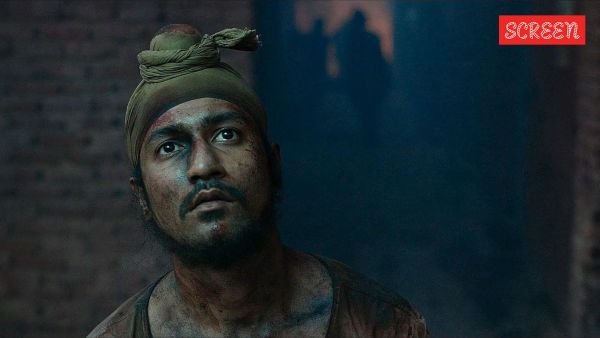 Photogram of Sardar Udham.
A revolutionary determined to make a difference. A man whose pursuit of justice refuses to be tainted by revenge. It is fitting that Kaushal gave the most luminous performance of his career in a film (Shoojit Sircar’s best work), where shades of all his formidable past roles converge. Raghav’s brooding fury, the pain of separation as Deepak, Vicky’s restless longing, Iqbal’s tender innocence, all find some kind of resonance in Udham Singh. However, the greatness lies not only in the synthesis, but in Kaushal’s embodiment of acting as reaction rather than performance. For much of the film’s nearly three-hour run, he travels the world for a cause he believes in. It is almost a performance without dialogue, where his anger speaks for itself. The Angry Young Man is realized in its purest form. And the only time he’s truly alive is when he’s in love. The teenager in love, the tender man in his romance. Therefore, his most devastating moment comes when he enters the room of a massacre to save his beloved, only to be overwhelmed by the magnitude of the death, forgetting that she lies among the fallen. It changes, inevitably, because no revolution is greater than love, and the portrait that remains is that of a lover lost to himself.


