


The Cabinet Committee on Economic Affairs on Wednesday approved a new investment policy for the urea sector to attract new investment in domestic manufacturing and reduce India’s dependence on imported fertilizers.
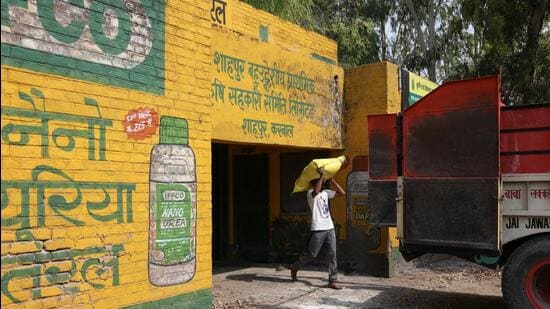
The National Investment Policy for Urea-2026 (NIPU-2026) replaces the previous investment policy, which expired in 2019, and seeks to encourage setting up of gas-based urea manufacturing plants in the country to bridge the gap between domestic production and demand.
According to an official statement, the policy introduces several changes over the 2012 framework, including separating fixed and variable costs for greater transparency, introducing returns on equity band of 12-16% and reducing foreign exchange risk by converting fixed costs into rupees after four years based on prevailing exchange rates.
These changes are expected to lead to greater savings ₹Each plant set up under the new policy will cost Rs 250 crore over the lifetime compared to projects approved under the 2012 policy, the statement said.
It said there are 33 operational urea manufacturing units in India with a total installed capacity of 26.94 million tonnes per annum. However, domestic production continues to fall short of demand, leading to substantial import of urea.
The government said the new gas-based urea plants set up under NIPU-2026 will help in increasing indigenous production and take the country closer to self-sufficiency in urea.
The 2012 policy led to the establishment of six new urea plants. Four of them were joint ventures involving public sector companies, and two were set up by private companies.
The new framework was necessary to support future capacity expansion in view of the proposals for new urea projects received by the Department of Fertilizers.


