


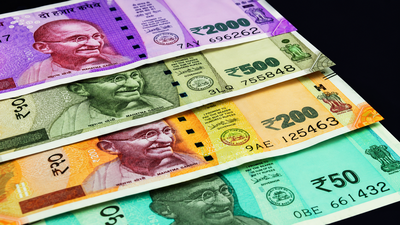
India’s banknotes may soon get plastic form.The country is moving ahead with its plan to explore polymer bank notes as the currency printing subsidiary of the Reserve Bank of India has invited global and domestic manufacturers to bid for the special material required to print such notes. According to sources cited by ANI, the notes are likely to be in lower denominations of Rs 10 and Rs 20 initially. Reserve Bank of India Note Printing (BRBNMPL) has issued Expression of Interest (EOI) seeking suppliers of Opacified Polymer Substrate Sheet with security features. According to ET, interested manufacturers have been asked to submit their bids by August 18.The move could pave the way for India’s first polymer bank notes, which will replace the special paper that has been used to print the country’s currency for nearly a century.
What are polymer banknotes?
Polymer banknotes are made using a special plastic substrate instead of the cotton-pulp paper currently used for Indian currency.First developed in Australia, the polymer note has since been adopted by countries including the United Kingdom, Canada, New Zealand and Singapore.Compared to traditional paper notes, polymer banknotes are more durable, resistant to moisture and dirt, and can withstand heavy circulation for long periods of time. Studies conducted globally have shown that polymer notes can last at least twice as long as paper notes, and in some cases up to five times.Because they remain in circulation longer, they also need to be replaced less frequently, potentially reducing printing and replacement costs over time.
The tender sets strict eligibility and security conditions
The proposed purchase comes with detailed eligibility requirements and security safeguards.Only manufacturers that have supplied polymer banknote substrates with embedded security features to central banks or banknote printing organizations for at least the last three years are eligible to participate. They must also be able to supply at least 20,400 reams, equivalent to 30% of the indicative requirement.For its initial requirement, BRBNMPL has estimated a demand of 68,000 reams, of which approximately 34,000 reams is earmarked for each of the two denominations. The company has clarified that this quantity is only for initial requirements and larger orders are likely to be received only after successful field trials.The tender also bars bidders from sourcing raw materials for India-specific banknote substrates from China or Pakistan. Manufacturers would need government security clearance, would have to limit any operations in those countries from the India contract, and would have to undertake not to supply India’s customized substrate to any third country.
Why is RBI exploring polymer currency?
One of the major reasons behind the proposal is the frequent handling of paper currency and its deterioration due to the diverse climatic conditions of India.According to RBI data, around two lakh spoiled notes are taken back and destroyed every year. Higher denomination notes like Rs 100 and Rs 500 form a major share among the damaged notes removed from circulation.Polymer notes may also include advanced security features such as transparent windows, holograms, color-changing elements, and other anti-counterfeiting measures that are more difficult to replicate than traditional paper currency.RBI data showed that there has been an increase in counterfeit high denomination notes detected in recent years, especially Rs 500 notes. Countries that have adopted polymer currency have generally reported low levels of successful counterfeiting.Australia, which switched completely to polymer notes by the mid-1990s, says the latest generation of its notes include a number of advanced security features that make them extremely difficult to counterfeit.
How long will polymer notes last in India?
The latest development comes weeks after Reserve Bank of India Governor Sanjay Malhotra said the central bank was examining the possibility of introducing polymer banknotes.Addressing the media after the Monetary Policy Committee (MPC) meeting, Malhotra said, “Polymer note is under consideration. We are examining its advantages and disadvantages. It is in the initial stage.”Apart from discussing the impact of the Middle East conflict on inflation, interest rates, global uncertainties and commodity prices, the RBI governor also talked about the possibility of introducing a new generation of currency notes made of polymers instead of traditional cotton-based paper.The MPC unanimously decided to keep the repo rate unchanged at 5.25% and maintained its neutral policy stance citing global uncertainties, geopolitical tensions in the Middle East and inflation concerns.
in discussion for years
The idea of introducing polymer currency in India is not new.The RBI first proposed polymer bank notes in 2007 and later announced a pilot project for Rs 10 polymer notes in Jaipur, Shimla, Bhubaneswar, Mysore and Kochi.Over the years, several tenders and feasibility studies were conducted, but the proposal remained at the planning stage.In 2016, the government informed Parliament that the process of procuring polymer notes had been initiated, although no rollout was undertaken across the country.Recently, the RBI has also introduced varnished notes, traditional paper banknotes coated with a protective polymer layer to improve durability.


