



 AFP
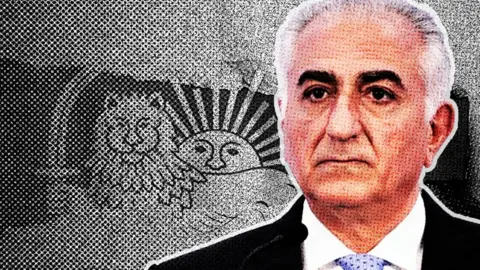
AFPMany protesters in Iran have been calling for the return of Reza Pahlavi, the exiled son of the last shah (king) of Iran.
Pahlavi himself has called on people to take to the streets. So who is the former crown prince and how much support does he have?
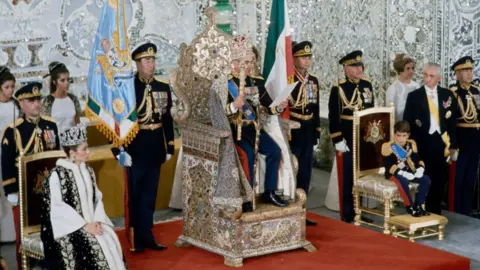
Groomed from birth to inherit the Peacock Throne of Iran, Reza Pahlavi was receiving fighter pilot training in the United States when the 1979 revolution swept away his father’s monarchy.
He watched from afar as his father, Mohammad Reza Shah Pahlavi, once backed by Western allies, struggled to find refuge in another country and ultimately died of cancer in Egypt.
The sudden loss of power left the young crown prince and his family stateless, dependent on a shrinking circle of royalists and sympathizers in exile.
In the decades that followed, tragedy struck the family more than once. His younger sister and brother took their own lives, leaving him the symbolic head of a dynasty that many thought was relegated to history.
Now, at 65, Reza Pahlavi is once again seeking a role in shaping his country’s future.
From his home in a quiet suburb near Washington, DC, his supporters describe him as low-key and approachable: a frequent visitor to local cafes, often accompanied by his wife, Yasmine, with no visible security.
In 2022, when a passerby asked him if he saw himself as the leader of Iran’s protest movement, he and Yasmine responded in unison: “Change has to come from within.”
However, in recent years his tone has become more assertive. Following Israeli airstrikes in 2025 that killed several senior Iranian generals, Pahlavi stated at a press conference in Paris that he was prepared to help lead a transitional government if the Islamic Republic collapsed.
He has since outlined a 100-day plan for an interim administration.
Pahlavi insists that this new confidence comes from the lessons learned in exile and what he calls the “unfinished mission” his father left behind.
“This is not about restoring the past,” he told reporters in Paris. “This is about ensuring a democratic future for all Iranians.”
 UPI/Bettmann File/Getty Images
Born in October 1960 in Tehran, Pahlavi was the shah’s only son after two previous marriages failed to produce a male heir. He grew up surrounded by privilege, educated by private tutors and trained from a young age to defend the monarchy.
At age 17 he was sent to Texas to train as a fighter pilot. But before he could serve again, the revolution overthrew his father’s government.
Since then, Pahlavi has lived in the United States. He studied political science, married Yasmine, a lawyer and fellow Iranian-American, and raised three daughters: Noor, Iman and Farah.
Divisive legacy
In exile, Pahlavi remains a potent symbol for monarchists. Many remember the Pahlavi era as one of rapid modernization and closer ties with the West. Others remember a time marked by censorship and Savak’s feared secret police, which was used to suppress dissent and was known for human rights abuses.
Over the years, his popularity within Iran has fluctuated. In 1980, he held a symbolic coronation ceremony in Cairo, proclaiming himself shah. Although it had little practical impact, some opponents say it undermines his current message of democratic reform.
It has made multiple attempts to build opposition coalitions, including Iran’s National Council for Free Elections, launched in 2013. Most have struggled with internal disagreements and limited reach within Iran.
Unlike some exiled opposition groups, Pahlavi has consistently rejected violence and distanced itself from armed factions such as Mojahedin-e Khalq (MEK).
He has repeatedly called for a peaceful transition and a national referendum to decide Iran’s future political system.
 EPA-EFE/REX/Shutterstock
Pahlavi has received new attention in recent years. Chants of “Reza Shah, may your soul be blessed,” referring to his grandfather, resurfaced during anti-government protests in 2017.
The murder of Mahsa Amini in police custody in 2022 sparked protests across the country, propelling him back into the media spotlight.
His attempt to unite Iran’s fragmented opposition attracted cautious international interest but ultimately failed to maintain momentum. Detractors argue that he has yet to build a lasting organization or an independent media outlet after four decades abroad.
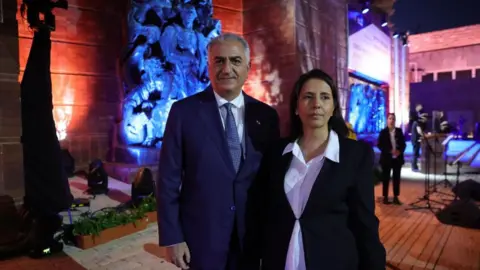
A controversial visit to Israel in 2023, during which he attended a Holocaust memorial event and met with Prime Minister Benjamin Netanyahu, further polarized opinion. Some Iranians saw this as a pragmatic approach; others saw it as a distancing from Iran’s Arab and Muslim allies.
After recent Israeli airstrikes inside Iran, he faced difficult questions.
In an interview with the BBC’s Laura Kuenssberg, he was asked if he supported Israeli attacks that put civilian lives at risk.
He maintained that ordinary Iranians were not the target and said that “anything that weakens the regime” would be welcomed by many inside Iran, comments that sparked fierce debate.
Sponsors and critics
Today, Pahlavi presents himself not as a king in the making, but as a figurehead of national reconciliation.
He says he wants to help guide Iran toward free elections, the rule of law and equal rights for women, while leaving the final decision on restoring the monarchy or establishing a republic in the hands of a nationwide vote.
His supporters see him as the only opposition figure with name recognition and an enduring commitment to peaceful change.
Critics respond that he remains too reliant on foreign backing and question whether Iranians inside the country, weary after decades of political turmoil, are willing to trust any exiled leader.
While Iran’s government presents him as a threat, it is impossible to measure his true support without an open political space and credible polls.
Some Iranians still revere his surname; others fear replacing one unelected ruler with another, even under democratic guise.
The body of Pahlavi’s father remains buried in Cairo, awaiting what royalists hope will one day be a symbolic return to Iran.
Whether the exiled crown prince will ever see that day – or a free Iran – remains one of the many unanswered questions about a nation still grappling with its past.


