


India’s smartphone market is facing a combination of smartphones becoming expensive across segments and weak consumer demand as well as discretionary spending, as shipments witnessed the biggest June quarter decline in six years. Counterpoint Research’s latest India smartphone shipment data projects a 10% year-on-year decline in shipments in the second quarter of 2026. This follows a first quarter decline of 3%, which was marked as the weakest quarter in six years
There is no good news coming for the smartphone market in the near future. “We expect India’s smartphone market to remain under pressure for the rest of the year, as increased memory and component costs keep device prices high. Smartphone memory prices have increased nearly 4x since September 2025 and are expected to potentially reach 5x in the coming months. As a result, we expect the market to decline 13% for the full year,” says Tarun Pathak, research director at Counterpoint.
There are some bright spots amid the overall disappointing picture, with the research pointing to the ultra-premium segment (above) ₹45,000) remains flexible due to the adoption of financing plans that reduce the upfront cost of purchasing a premium phone.
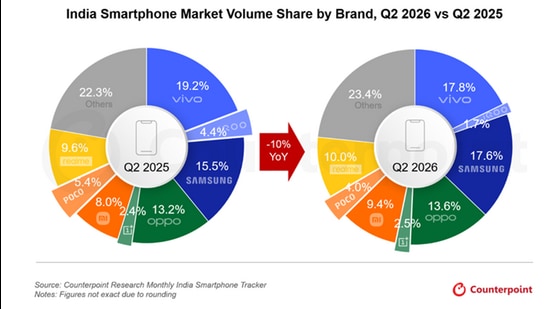
Vivo leads the way with 17.8% market share, which is a significant decline from 19.2% share in Q2 2025. Samsung is a very close second with a 17.6% share (up from 15.5% year-on-year). Followed by Oppo (13.6%; up from 13.2%) and Xiaomi (9.4%; up from 8%).
“On the supply side, the persistent rise in memory and other component costs prompted almost every major OEM to implement multiple rounds of price hikes, resulting in an average increase of around 15% in smartphone prices by the end of the second quarter,” says Prachir Singh, senior analyst.
He further said, “The mass-market segment (under Rs 15,000) was the most affected, with its shipments declining by 45% year-on-year. Since most Chinese brands are heavily involved in the entry- and mid-tier segments, their overall market share fell to its lowest level in the second calendar quarter since 2020.”
Counterpoint says Apple’s shipments are down 3% in the second quarter of 2026, with its market share now at 7%. They say, “While consumer demand for the iPhone 17 series remained strong, persistent supply constraints and inventory shortages across online and offline channels limited the brand’s shipment growth during the quarter.”
There are some trends worth keeping an eye on in the coming quarters, such as chipmakers’ share of the pie. The latest data shows MediaTek leading India’s smartphone chipset market with 49% shipment share.
Google has emerged as the fastest growing smartphone brand in the ultra-premium segment ₹45,000 price) in Q2 2026, registering 68% year-on-year growth for its Pixel phone portfolio. The general consensus is that the tech giant has benefited from a stronger than usual marketing push and greater offline visibility of Pixel phones to potential buyers. Google has also avoided any price increases so far.
Pathak warns that the second half of 2026, a period marked by festive sales, will not be easy for phone makers to navigate.
“Since component prices are unlikely to normalize before next year, affordability will remain the industry’s biggest challenge. As H2 accounts for the bulk of annual smartphone sales, OEMs are expected to focus on portfolio optimization, financing-based affordability and premium offerings to support demand.”
It is expected that although it is unlikely to see positive trends at more affordable price points, the premium phone segment may continue the trend of resilience, which may be further supported by financing options.

