


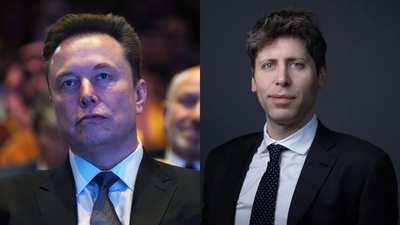
A federal court on Monday dismissed Elon Musk’s claims against OpenAI and its top executives, ending a closely watched legal battle over the company’s transformation from a nonprofit research lab to one of the world’s most valuable AI firms.The nine-person jury found that Musk waited too long to file his lawsuit and missed the deadline under the statute of limitations. Judge Yvonne Gonzalez Rogers considered the advisory jury’s decision to be a court of law and dismissed the claims after jurors deliberated for about two hours.The trial, which began on April 27 in Oakland, California, highlighted the bitter division between Musk and OpenAI’s leadership. Musk co-founded OpenAI in 2015 and invested $38 million in the company in its early years before leaving in 2018.Musk accused OpenAI CEO Sam Altman and President Greg Brockman of abandoning OpenAI’s shared vision of developing artificial intelligence as a nonprofit dedicated to the benefit of humanity. He claimed that the company secretly shifted to a profit-driven structure and alleged that Altman and Brockman unjustly enriched themselves by increasing OpenAI’s valuation.During the lawsuit, Musk argued that the dispute was ultimately simple. “I think they’re going to try to make this lawsuit very complicated, but it’s really very simple,” Musk said, as quoted by the AP. “Which is, it’s not okay to steal from charity.”Musk demanded damages to be paid to OpenAI’s charitable arm and also demanded Altman’s removal from the company’s board.OpenAI and Altman rejected the allegations, arguing that no promise was made to keep OpenAI non-profitable forever. He said Musk understood the company’s direction and later filed the lawsuit because he was unable to gain unilateral control over the fast-growing AI developer.The three-week trial included testimony from Musk, Altman, Brockman, Microsoft CEO Satya Nadella, and former OpenAI board members Helen Toner and Tasha McCauley. Brockman testified that his stake in OpenAI is worth approximately $30 billion.Elon Musk attacked the federal judge who accepted the jury’s finding that his lawsuit was filed too late, saying the decision sets a “terrible precedent.” “This shows why the decision by the horrible activist Oakland judge, who used the jury as a fig leaf, sets such a terrible precedent,” Musk wrote onJurors also heard details of Altman being temporarily removed as CEO in 2023, after which he returned to the post days later. Toner and McCauley, who had testified about the board’s decision to fire Altman, were themselves ousted after his reinstatement.Altman testified that concerns over Musk’s efforts to gain greater control over OpenAI contributed to tension between them as the company pursued artificial general intelligence.“One of the reasons we started OpenAI is that we didn’t think that AGI could be under the control of any one person, no matter how good their intentions,” Altman said.At the end of his testimony, Altman reflected on the decline of his relationship with Musk.“I felt like he abandoned us, didn’t keep his promises, put the company in a very difficult position, put the mission in jeopardy, didn’t care about the things I thought he cared about,” Altman said. “This has been extremely painful for me…that someone I respected so much did not accept it and continued to attack us publicly.”OpenAI argued throughout the case that Musk’s lawsuit was motivated by frustration over the company’s rapid growth and was intended to help his own AI startup, XAI, which he plans to launch in 2023.

