


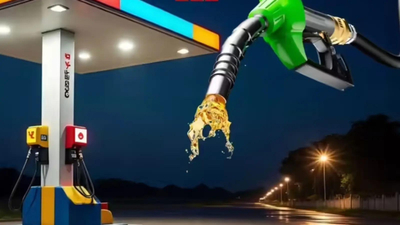
 The three state-run fuel retailers – Indian Oil Corporation, Bharat Petroleum Corporation Limited and Hindustan Petroleum Corporation Limited – are currently suffering from a combined underrecovery of around Rs 1,600 crore to Rs 1,700 crore per day, sources were quoted as saying by news agency PTI.The losses come despite a sharp rise in global crude oil prices, with retail prices of petrol and diesel in India remaining unchanged at nearly two-year-old levels of Rs 94.77 per liter and Rs 87.67 per litre, respectively.Domestic LPG prices increased by Rs 60 per cylinder in March, but are still below actual cost levels.
WTOs under financial pressure
Losses arise from the gap between the actual cost of fuel and the retail price, known as underrecovery.Sources said OMCs have continued uninterrupted supplies of petrol, diesel and LPG despite import disruptions caused by the Middle East conflict, which affected nearly 40 per cent of India’s crude oil imports, 90 per cent of LPG imports and 65 per cent of natural gas imports.“Financially sound OMCs are critical for India’s energy security, continuity of supply, infrastructure expansion and economic stability,” a source told PTI.The report says companies may now need larger working capital loans to continue operations if elevated crude oil prices persist for a longer period.“If elevated crude oil prices persist for a prolonged period, OMCs may require increased borrowing for working capital and a calibrated reprioritization of some capital expenditure schedules,” a source said.
Fuel price rise can become inevitable
Sources quoted by PTI said the decision to increase petrol and diesel prices has now become a political call for the government.“There is no doubt that an increase in fuel price has become inevitable, but the government must decide the timing and amount of the increase,” a source said.The Center has already reduced excise duty to absorb some of the burden. Excise duty on petrol was reduced to Rs 3 per liter from Rs 13, while excise duty on diesel was reduced to zero from Rs 10 per litre, resulting in a monthly revenue hit of around Rs 14,000 crore for the government.Despite growing pressure, strategic investments in refining expansion, biofuels, ethanol blending and energy security infrastructure are expected to continue with government support.


-1778431663505_m.webp?w=1200&resize=1200,0&ssl=1 "जम्मू-कश्मीर का बदला मौसम, अगले तीन दिनों तक होगी बारिश; ओलावृष्टि और तूफान का अलर्ट
& more related news here")