


/https%3A%2F%2Fsportsmole-media-prod.s3.gra.io.cloud.ovh.net%2Fuploads%2F2025%2F09%2Fmarcelino-68d01592f3012331178939.jpg?w=150&resize=150,150&ssl=1 "Preview: Villarreal vs Sevilla – prediction, team news, lineups
& more related news here")

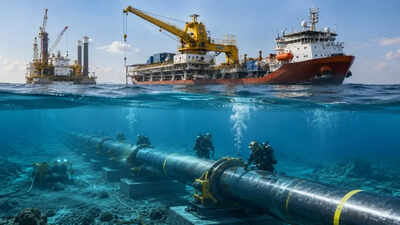
As concerns grow over the Strait of Hormuz, India is accelerating efforts to secure unhindered gas imports from the Gulf through a direct sub-sea pipeline. With energy security emerging as a major priority, the government is paying renewed attention to the proposed project connecting Oman to India. The pipeline, which is estimated to cost around Rs 40,000 crore ($4.7-4.8 billion), could take five to seven years to complete if approved, according to a petroleum ministry official.India’s demand for natural gas is continuously increasing as the country looks to increase the share of gas in its overall energy basket. Current consumption is estimated to be around 190-195 million standard cubic meters per day (mmscmd), while projections indicate that demand may increase to around 290-300 mmscmd by 2030. LNG imports alone are expected to increase significantly, potentially reaching 180-200 MMSCMD before the decade ends.The petroleum ministry is planning to ask state-owned companies including GAIL, Engineers India and Indian Oil Corporation to prepare a comprehensive feasibility assessment for the project, senior officials told ET. The government is currently relying on a preliminary study submitted by South Asia Gas Enterprise, or SAGE, a private consortium headquartered in New Delhi.Read this also ‘The situation is not that serious’: Are India’s forex reserves enough to protect the rupee? Why are economists confident? The move underlines India’s sensitivity to disruptions in LNG supplies and fluctuations in global gas prices. It also highlights the gap between manufacturing-heavy economies like India and China in building long-term energy resilience.If the detailed feasibility study yields favorable findings, the next phase will include formal discussions between the Governments of India and Oman on gas supply arrangements, financing mechanisms and execution plans.According to an official, a dedicated pipeline from West Asia would provide a more reliable and competitively priced supply of gas while reducing maritime barriers and dependence on transit countries.
Key Features of the Project
The proposed Middle East-India Deepwater Pipeline (MEIDP) is planned as a 2,000-km underwater network running beneath the Arabian Sea and directly connecting Oman to the Gujarat coastline. The pipeline is expected to transport approximately 31 mmscmd of natural gas.Officials said the alignment will pass through the Arabian Sea through Oman and the United Arab Emirates while avoiding politically sensitive areas. The project will also enable India to tap gas reserves from countries including Oman, UAE, Saudi Arabia, Iran, Turkmenistan and Qatar – the region is estimated to have around 2,500 trillion cubic feet of gas reserves. Reaching a depth of approximately 3,450 metres, the pipeline will be one of the deepest sub-sea gas pipelines attempted anywhere in the world.Recent technical assessments have reportedly established that the project is achievable due to advances in deep sea pipeline installation and repair technologies. In its application submitted to the government, SAGE said it has already installed about 3,000 meters of test pipeline on the proposed route at a cost of about Rs 25 crore to investigate the condition of the seabed.Read this also Foreign outflow concerns ‘exaggerated’: S&P confident about India amid Middle East crisis; Says economy ‘fundamentally strong’ Nearly two-thirds of India’s LNG imports in 2025 will transit through the Strait of Hormuz, making the country heavily dependent on the vital sea corridor. In late February, when Iran effectively blocked the route amid tensions involving the US and Israel, global LNG availability dropped by more than 20%, sending prices sharply higher.The disruption in Hormuz exposed India’s sensitivity to not only supply disruptions but also severe price fluctuations. Apart from the pipeline proposal, policymakers are also raising concerns over India’s limited gas storage infrastructure.Unlike crude oil, the country has almost no strategic natural gas reserves. This leaves India vulnerable during market disruptions, as it does not have the capacity to store low-cost gas for emergencies. The development also draws attention to the contradiction between India and China in terms of pipeline connectivity and gas storage capacity. Over the past two decades, China has steadily built several overland gas pipeline networks, creating supply security that has helped it avoid the Hormuz disruption.


